 …
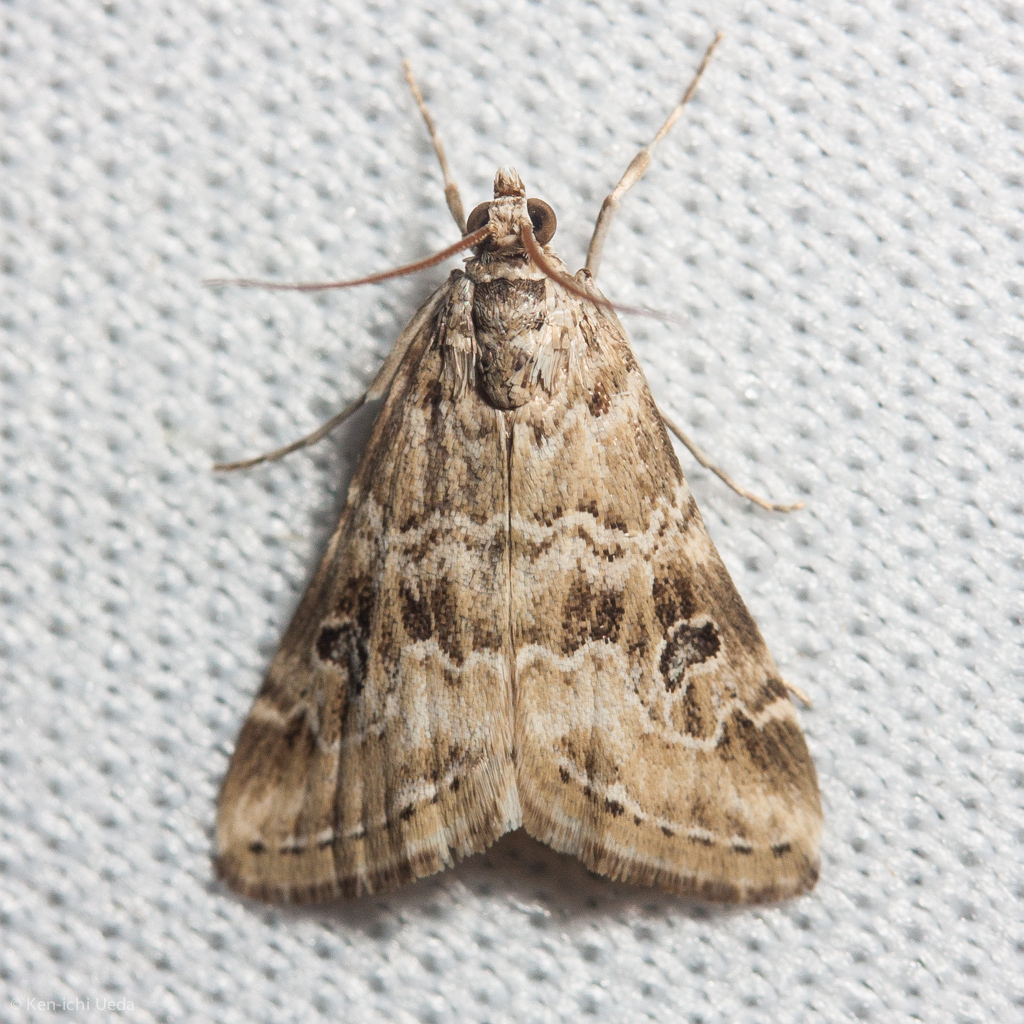
Cabbage Webworm Moth
Hellula rogatalis
Insectstrong against fungi, fish
Common
Swarm
While active with another insect in play, each of its attacks also hits the opposing bench for 10, without knocking them out (20 with two others).
40

38
Cabbage Webworm Moth
Hellula rogatalis
Insectstrong against fungi, fish
Common
While active with another insect in play, each of its attacks also hits the opposing bench for 10, without knocking them out (20 with two others).
Hellula rogatalis
Photo: © Ken-ichi Ueda (original photo) · CC BY 4.0 (licence text) · cropped
Strong against: it deals 20% more damage to them. Weak against: these types deal 20% more damage to it.
Hellula rogatalis, the cabbage webworm, is a moth of the family Crambidae described by George Duryea Hulst in 1886. It is found from the southern United States north in the east to Maryland, New York and Ontario.
It is also found in Mexico, where it has been recorded from Distrito Federal.
The wingspan is 15–21 mm. The forewings are brownish yellow or grayish yellow with wavy white antemedial median, and postmedial lines. The subterminal line consists of several equally spaced black dots. The hindwings are light gray or grayish yellow with a dark terminal line and pale fringe. Adults are on wing from late March to October in the south and from June to October in the north. There are several generations per year in the south.
The larvae feed on a wide range of Brassicaceae and related species, including cabbage, turnip, beet, collard, cauliflower, kale, rutabaga, radish, kohlrabi, mustard, rape, horseradish, shepherd's purse and purslane. They feed on the leaf buds and young leaves of their host plant. They create a silken web.
Excerpt from the Wikipedia article Hellula rogatalis, by its authors, under the CC BY-SA 4.0 licence.
No global status on the IUCN Red List: that’s what makes this card Common.
Every Common card has 100 points, shared between HP, ATK and DEF:
How they’re shared out:

 DEF 38