 …
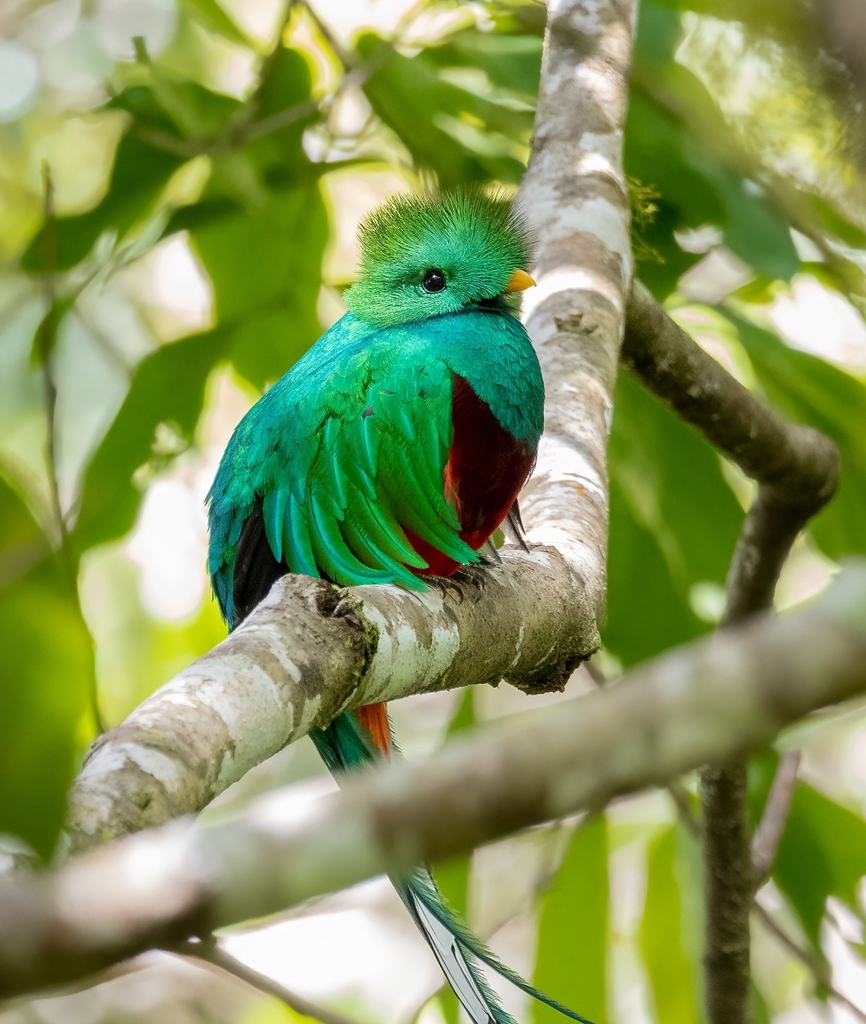
Resplendent Quetzal
Pharomachrus mocinno
Birdstrong against fish, reptiles
Uncommon
Swoop
While active with another bird in play, it hits 6 harder on its first attack after entering play (12 with two others).
47

43
Resplendent Quetzal
Pharomachrus mocinno
Birdstrong against fish, reptiles
Uncommon
While active with another bird in play, it hits 6 harder on its first attack after entering play (12 with two others).
Pharomachrus mocinno
Photo: © Derek Spencer (original photo) · CC BY 4.0 (licence text) · cropped
Strong against: it deals 20% more damage to them. Weak against: these types deal 20% more damage to it.
The resplendent quetzal (Pharomachrus mocinno) is a small bird found in Central America and southern Mexico that lives in tropical forests, particularly montane cloud forests. They are part of the family Trogonidae and have two recognized subspecies, P. m. mocinno and P. m. costaricensis. Like other quetzals, the resplendent is mostly omnivorous; its diet mainly consists of fruits of plants in the laurel family, Lauraceae, but it occasionally also preys on insects, lizards, frogs and snails.
The species is well known for its colorful and complex plumage that differs substantially between sexes. Males have iridescent green plumes, a red lower breast and belly, black innerwings and a white undertail, whilst females are duller and have a shorter tail. Grey lower breasts, bellies, and bills, along with bronze-green heads are characteristic of females. These birds hollow holes in decaying trees or use ones already made by woodpeckers as a nest site. They are known to take turns while incubating, males throughout the day and females at night. The female usually lays one to three eggs, which hatch in 17 to 19 days. The quetzal is an altitudinal migrant, migrating from the slopes to the canopy of the forest. This occurs during the breeding season, which varies depending on the location, but usually commences in March and extends as far as August.
Abridged excerpt from the Wikipedia article Resplendent quetzal, by its authors, under the CC BY-SA 4.0 licence.
Near Threatened on the IUCN Red List: that’s what makes this card Uncommon.
Every Uncommon card has 115 points, shared between HP, ATK and DEF:
How they’re shared out:

 DEF 43