 …
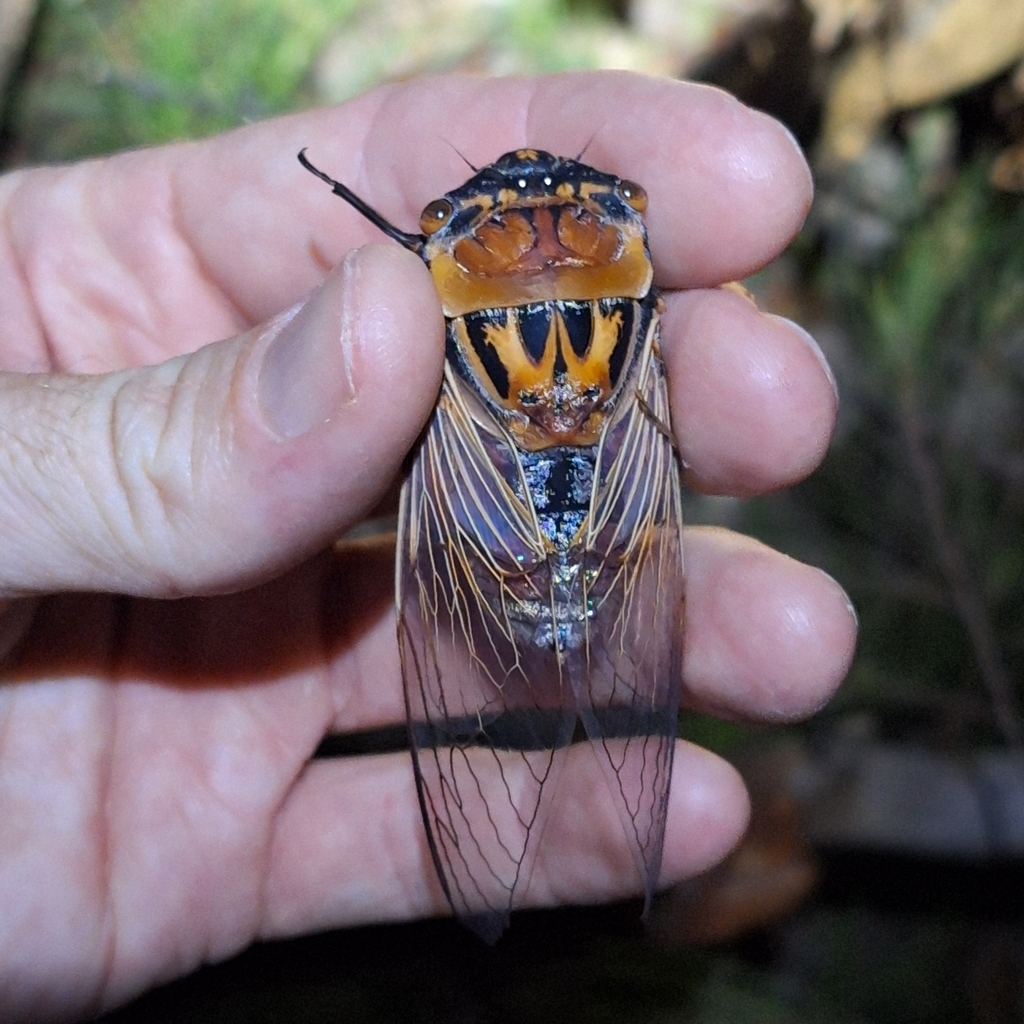
Eastern Double Drummer
Thopha saccata
Insectstrong against fungi, fish
Common
Swarm
While active with another insect in play, each of its attacks also hits the opposing bench for 10, without knocking them out (20 with two others).
39

38
Eastern Double Drummer
Thopha saccata
Insectstrong against fungi, fish
Common
While active with another insect in play, each of its attacks also hits the opposing bench for 10, without knocking them out (20 with two others).
Thopha saccata
Photo: © Greg Tasney (original photo) · CC BY-SA 4.0 (licence text) · cropped
Strong against: it deals 20% more damage to them. Weak against: these types deal 20% more damage to it.
Thopha saccata, the double drummer, is the largest Australian species of cicada and reputedly the loudest insect in the world. Documented by the Danish zoologist Johan Christian Fabricius in 1803, it was the first described and named cicada native to Australia. Its common name comes from the large dark red-brown sac-like pockets that the adult male has on each side of its abdomen—the "double drums"—that are used to amplify the sound it produces.
Broad-headed compared with other cicadas, the double drummer is mostly brown with a black pattern across the back of its thorax, and has red-brown and black underparts. The sexes are similar in appearance, though the female lacks the male's tymbals and sac-like covers. Found in sclerophyll forest in Queensland and New South Wales, adult double drummers generally perch high in the branches of large eucalypts. They emerge from the ground where they have spent several years as nymphs from November until March, and live for another four to five weeks. They appear in great numbers in some years, yet are absent in others.
Excerpt from the Wikipedia article Thopha saccata, by its authors, under the CC BY-SA 4.0 licence.
No global status on the IUCN Red List: that’s what makes this card Common.
Every Common card has 100 points, shared between HP, ATK and DEF:
How they’re shared out:

 DEF 38