 …
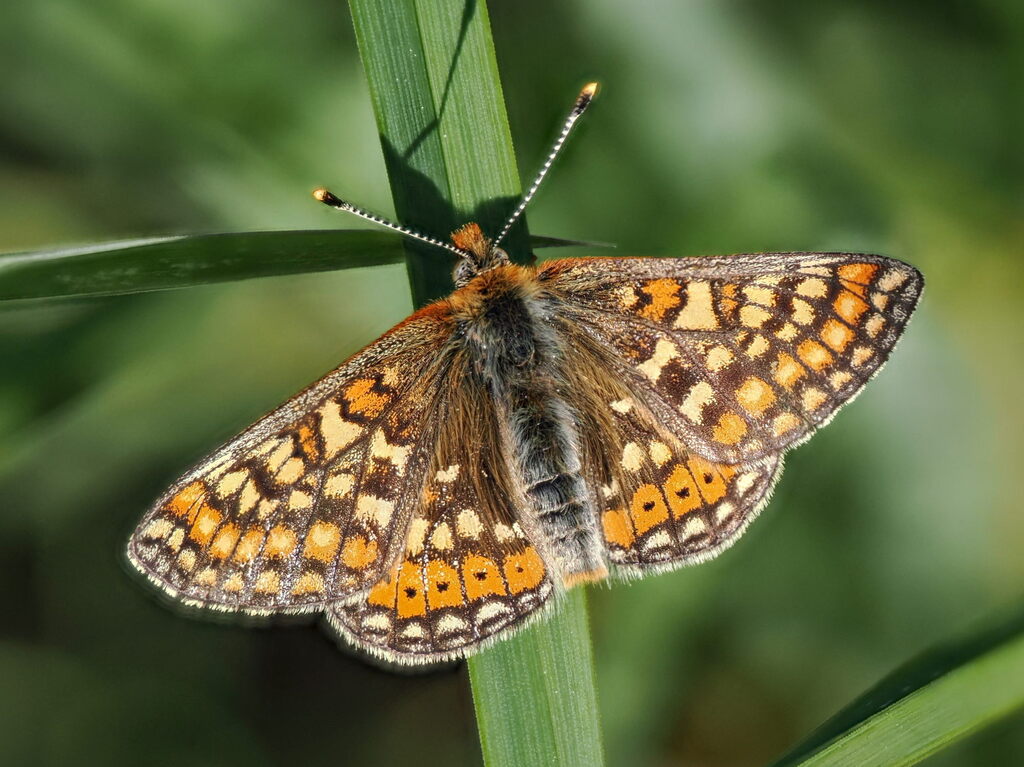
Marsh Fritillary
Euphydryas aurinia
Insectstrong against fungi, fish
Common
Swarm
While active with another insect in play, each of its attacks also hits the opposing bench for 10, without knocking them out (20 with two others).
40

39
Marsh Fritillary
Euphydryas aurinia
Insectstrong against fungi, fish
Common
While active with another insect in play, each of its attacks also hits the opposing bench for 10, without knocking them out (20 with two others).
Euphydryas aurinia
Photo: © Gilles San Martin (original photo) · CC BY-SA 4.0 (licence text) · cropped
Strong against: it deals 20% more damage to them. Weak against: these types deal 20% more damage to it.
The marsh fritillary (Euphydryas aurinia) is a butterfly of the family Nymphalidae. Commonly distributed in the Palearctic region, the marsh fritillary's common name derives from one of its several habitats, marshland. The prolonged larval stage lasts for approximately seven to eight months and includes a period of diapause over the winter. The larvae are dependent on the host food plant Succisa pratensis not only for feeding but also for hibernation, because silken webs are formed on the host plant as the gregarious larvae enter hibernation. Females lay eggs in batches on the host plant and are, like other batch-layers, selective about the location of oviposition because offspring survivorship levels for batch-layers are more tied to location selection than they are for single-egg layers.
As of 2019 the butterfly's global conservation status is considered of least concern, but it has faced rapid decline and is considered regionally vulnerable or endangered over much of its range.
Excerpt from the Wikipedia article Marsh fritillary, by its authors, under the CC BY-SA 4.0 licence.
No global status on the IUCN Red List: that’s what makes this card Common.
Every Common card has 100 points, shared between HP, ATK and DEF:
How they’re shared out:

 DEF 39