 …
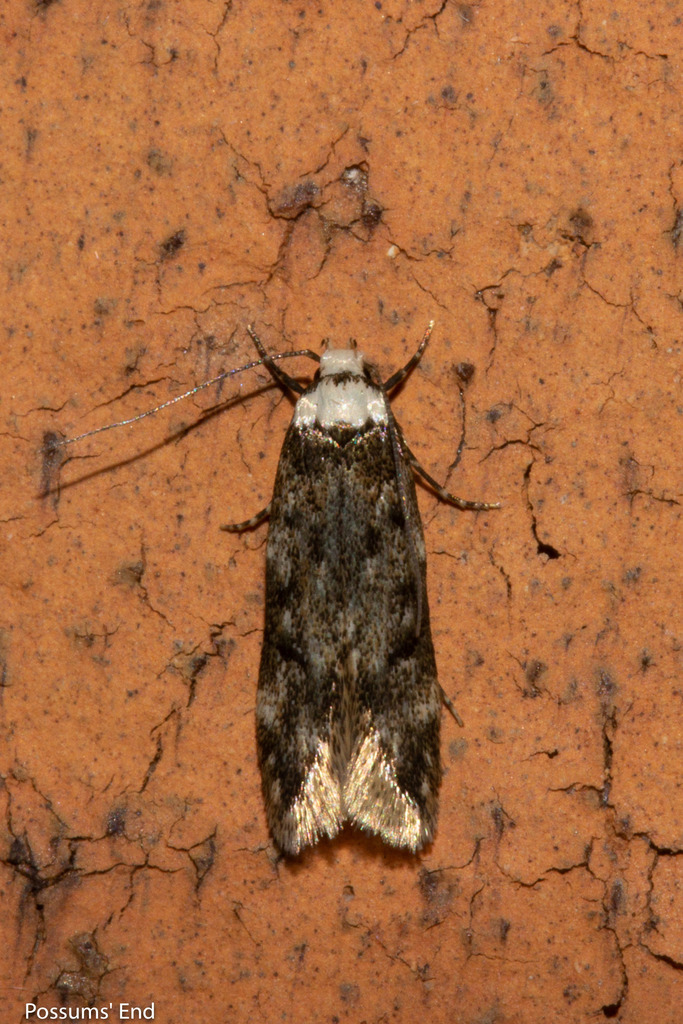
White-shouldered House Moth
Endrosis sarcitrella
Insectstrong against fungi, fish
Common
Swarm
While active with another insect in play, each of its attacks also hits the opposing bench for 10, without knocking them out (20 with two others).
39

39
White-shouldered House Moth
Endrosis sarcitrella
Insectstrong against fungi, fish
Common
While active with another insect in play, each of its attacks also hits the opposing bench for 10, without knocking them out (20 with two others).
Endrosis sarcitrella
Photo: © Possums' End (original photo) · CC BY 4.0 (licence text) · cropped
Strong against: it deals 20% more damage to them. Weak against: these types deal 20% more damage to it.
The white-shouldered house moth (Endrosis sarcitrella) is a species of gelechioid moth. It belongs to the subfamily Oecophorinae of the concealer moth family (Oecophoridae), just like the brown house moth (Hofmannophila pseudospretella). Though several presumed congeners of E. sarcitrella were described, its genus Endrosis is currently understood to be monotypic.
This moth is a common species, found by now almost worldwide due to its synanthropic habits. It occurs regularly inside buildings, and being continuously-brooded, can be found at any time of year. It frequents light sources, and can be found in outbuildings where dried food such as grain is kept. It also inhabits birds nests.
The larva is a little grub-like caterpillar and lives on dry plant and animal debris, where it spins itself a small silken hideout. Recorded foodstuffs include dried fruits, cereals (including bran and flour) and other seeds, potatoes, rotting wood, and even insect specimens, wool and old textiles, and guano.
Excerpt from the Wikipedia article White-shouldered house moth, by its authors, under the CC BY-SA 4.0 licence.
No global status on the IUCN Red List: that’s what makes this card Common.
Every Common card has 100 points, shared between HP, ATK and DEF:
How they’re shared out:

 DEF 39