 …
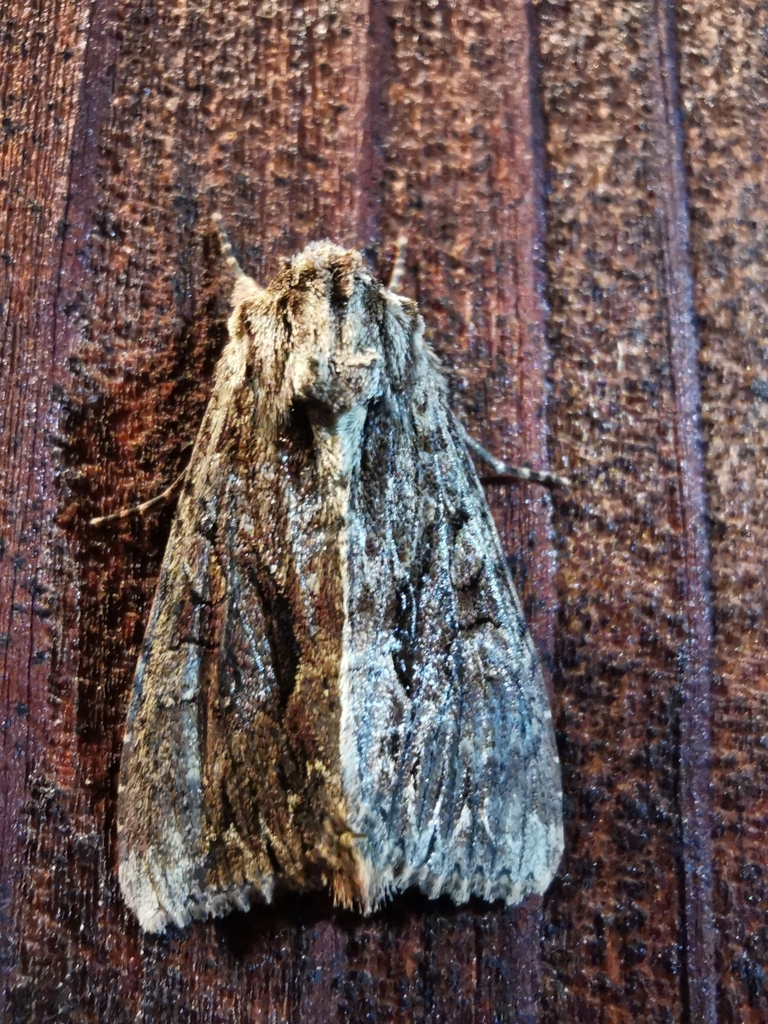
Dark Arches
Apamea monoglypha
Insectstrong against fungi, fish
Common
Swarm
While active with another insect in play, each of its attacks also hits the opposing bench for 10, without knocking them out (20 with two others).
42

37
Dark Arches
Apamea monoglypha
Insectstrong against fungi, fish
Common
While active with another insect in play, each of its attacks also hits the opposing bench for 10, without knocking them out (20 with two others).
Apamea monoglypha
Photo: © Larissa Schatz (original photo) · CC BY 4.0 (licence text) · cropped
Strong against: it deals 20% more damage to them. Weak against: these types deal 20% more damage to it.
Apamea monoglypha, the dark arches, is a moth of the family Noctuidae. The species was first described by Johann Siegfried Hufnagel in 1766. It is a common, sometimes abundant, European species. It is found in most of Europe except northernmost Fennoscandia and the southern parts of the Iberian Peninsula and Greece. The species is also found in Anatolia, Turkestan, Western Asia and Central Asia, Siberia and Mongolia. In the Alps it is found up to heights of 2,500 meters. The smaller subspecies sardoa is found on Sardinia and Corsica.
This species has a wingspan of 46 to 54 mm, the forewings varying from pale greyish brown to almost black and cryptically patterned. All but the darkest individuals usually have an obvious black mark close to the dorsum and a pale zigzag subterminal line. The hindwings are whitish with darker venation and a dark shaded band at the margin. The larva is dull whitish grey or dark grey; dorsal line pale: lateral line broadly pale; tubercles large and black; head and thoracic plate brown black.
Excerpt from the Wikipedia article Apamea monoglypha, by its authors, under the CC BY-SA 4.0 licence.
No global status on the IUCN Red List: that’s what makes this card Common.
Every Common card has 100 points, shared between HP, ATK and DEF:
How they’re shared out:

 DEF 37