 …
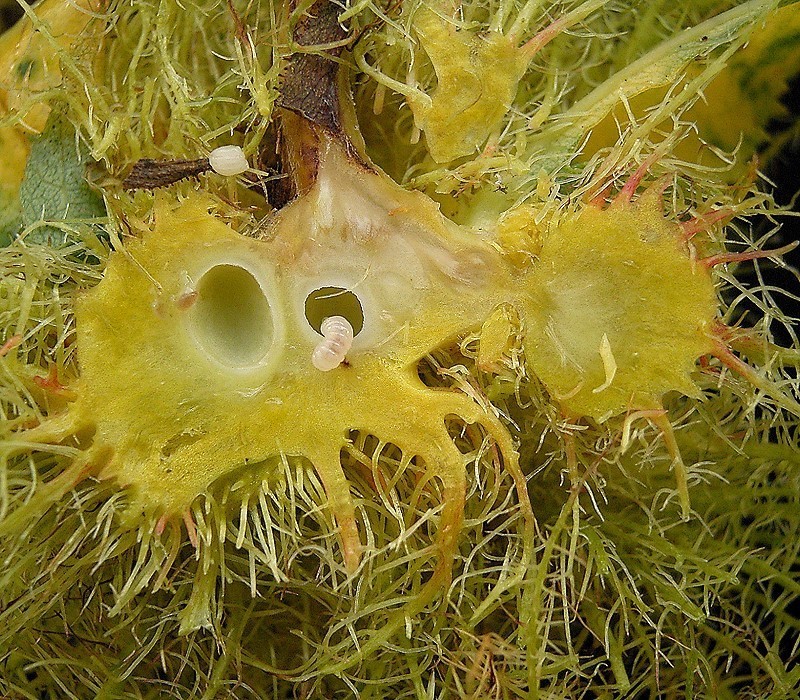
Mossy Rose Gall Wasp
Diplolepis rosae
Insectstrong against fungi, fish
Common
Swarm
While active with another insect in play, each of its attacks also hits the opposing bench for 10, without knocking them out (20 with two others).
41

38
Mossy Rose Gall Wasp
Diplolepis rosae
Insectstrong against fungi, fish
Common
While active with another insect in play, each of its attacks also hits the opposing bench for 10, without knocking them out (20 with two others).
Diplolepis rosae
Photo: © Frank Vincentz (original photo) · CC BY-SA 4.0 (licence text) · cropped
Strong against: it deals 20% more damage to them. Weak against: these types deal 20% more damage to it.
Diplolepis rosae is a gall wasp which causes a gall known as the rose bedeguar gall, robin's pincushion, mossy rose gall, or simply moss gall. The gall develops as a chemically induced distortion of an unopened leaf axillary or terminal bud, mostly on field rose (Rosa arvensis) or dog rose (Rosa canina) shrubs. The female wasp lays up to 60 eggs within each leaf bud using her ovipositor. The grubs develop within the gall, and the wasps emerge in spring; the wasp is parthenogenetic with fewer than one percent being males.
A similar gall is caused by Diplolepis mayri, but this is much less common.
Excerpt from the Wikipedia article Diplolepis rosae, by its authors, under the CC BY-SA 4.0 licence.
No global status on the IUCN Red List: that’s what makes this card Common.
Every Common card has 100 points, shared between HP, ATK and DEF:
How they’re shared out:

 DEF 38