 …
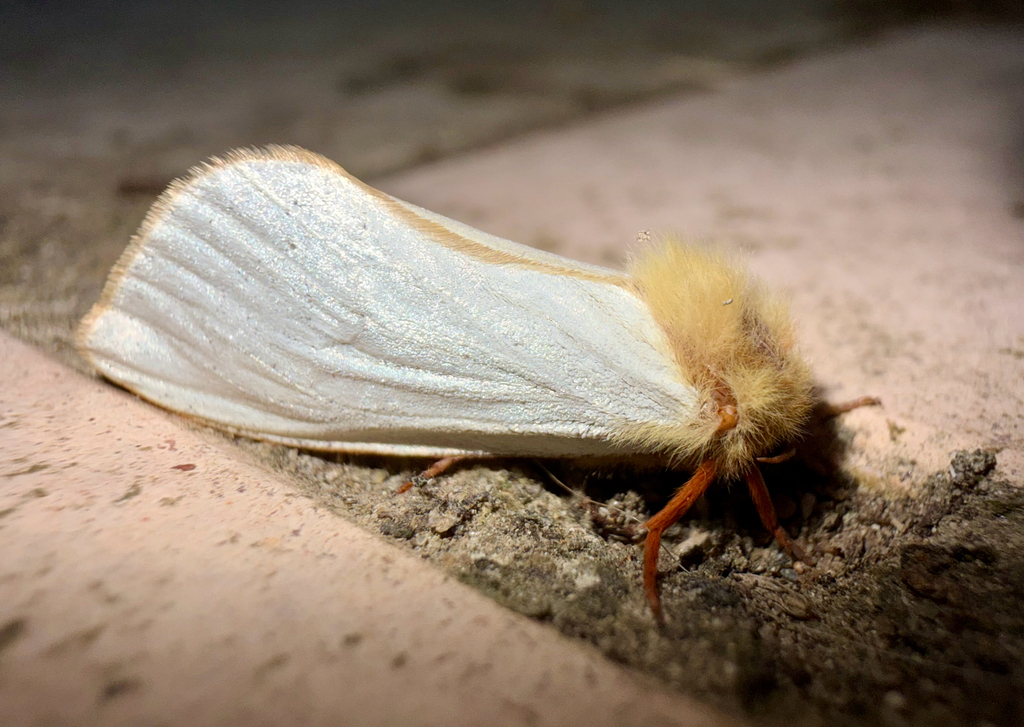
Ghost Moth
Hepialus humuli
Insectstrong against fungi, fish
Common
Swarm
While active with another insect in play, each of its attacks also hits the opposing bench for 10, without knocking them out (20 with two others).
38

40
Ghost Moth
Hepialus humuli
Insectstrong against fungi, fish
Common
While active with another insect in play, each of its attacks also hits the opposing bench for 10, without knocking them out (20 with two others).
Hepialus humuli
Photo: © Kieran Roy Powell (original photo) · CC BY 4.0 (licence text) · cropped
Strong against: it deals 20% more damage to them. Weak against: these types deal 20% more damage to it.
The ghost moth or ghost swift (Hepialus humuli) is a moth of the family Hepialidae. It is common throughout Europe, except for the far south-east.
Female ghost moths are larger than males, and exhibit sexual dimorphism with their differences in size and wing color. The adults fly from June to August and are attracted to light. The species overwinters as a larva. The larva is whitish and maggot-like and feeds underground on the roots of a variety of wild and cultivated plants (see list below). The species can be an economically significant pest in forest nurseries.
The term ghost moth is sometimes used as a general term for all hepialids. The ghost moth gets its name from the hovering display flight of the male, sometimes slowly rising and falling, over open ground to attract females. In a suitable location, several males may display together in a lek.
Excerpt from the Wikipedia article Ghost moth, by its authors, under the CC BY-SA 4.0 licence.
No global status on the IUCN Red List: that’s what makes this card Common.
Every Common card has 100 points, shared between HP, ATK and DEF:
How they’re shared out:

 DEF 40