 …
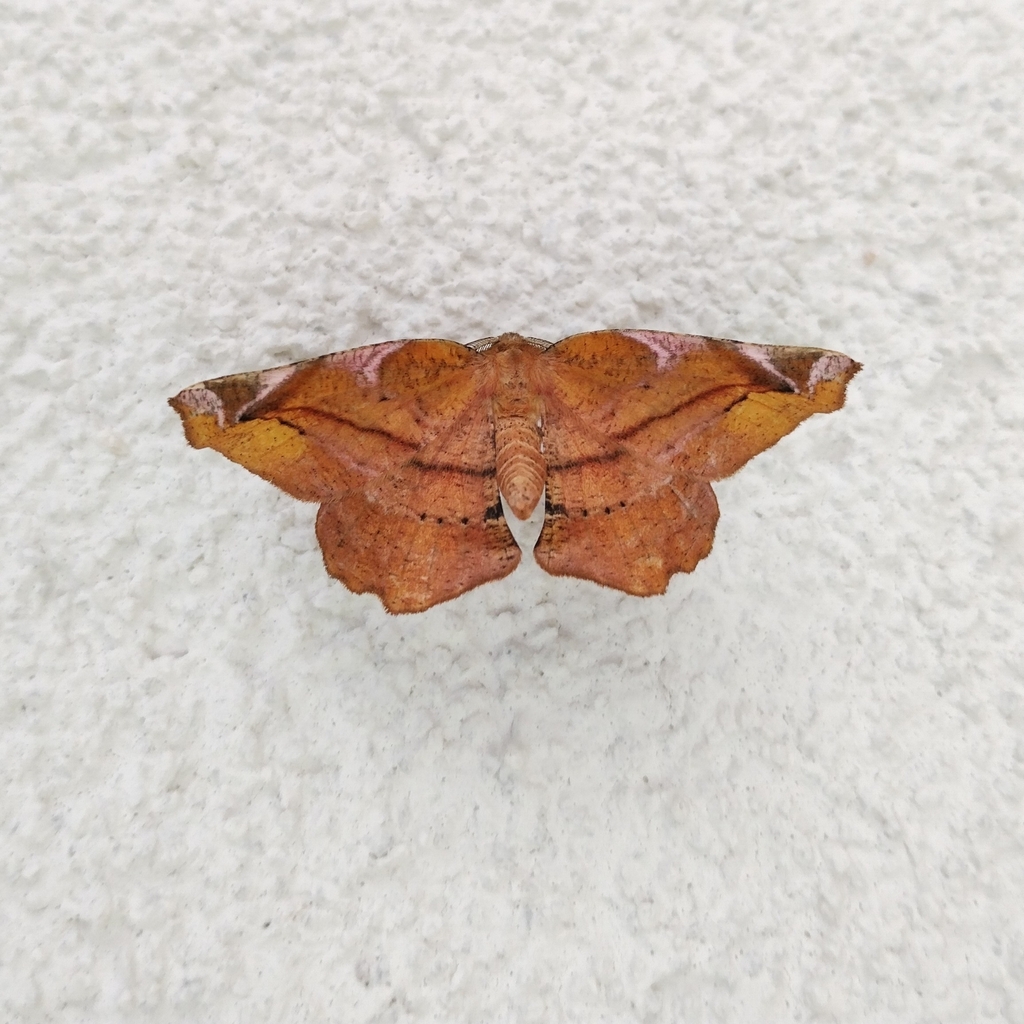
Lilac Beauty
Apeira syringaria
Insectstrong against fungi, fish
Common
Swarm
While active with another insect in play, each of its attacks also hits the opposing bench for 10, without knocking them out (20 with two others).
30

40
Lilac Beauty
Apeira syringaria
Insectstrong against fungi, fish
Common
While active with another insect in play, each of its attacks also hits the opposing bench for 10, without knocking them out (20 with two others).
Apeira syringaria
Photo: iNaturalist (original photo) · CC0 (licence text) · cropped
Strong against: it deals 20% more damage to them. Weak against: these types deal 20% more damage to it.
Apeira syringaria, the lilac beauty, is a moth of the family Geometridae. It is found throughout Europe and east across the Palearctic to the Russian Far East
and Japan.
The wingspan is 38–42 mm. The length of the forewings is 19–22 mm. The front wings are coloured violet-grey to bright reddish brown and yellowish in the marginal field. There are white marks along the costa. The interior cross line is pinkish white and broken under the costa (toward the basal field). The narrow central band is red-brown and continues on the hindwings. The outer cross line is dark on the front edge becoming pink white adjoining on the hind wings a dark row of dots. A pink-white spot is located off the apex of the wing. In rest, the front margins of the wings are curiously folded. This, in combination with the colour and pattern give a crumpled leaf-like appearance.
The caterpillars reach a length of up to 30 millimeters.. On the seventh segment there is an eye-catching pair of curved extensions; smaller dorsal humps are located on segments five and six. They are pale ochre-coloured with dark olive-brown or purple-brown markings. The head capsule is grey-brown. In a resting position, the caterpillars do not sit stretched out like most other looper caterpillars, but remain curved to resemble the dried fruit capsules of the lilac.
The moth flies from June to July.
The caterpillars feed on lilac, honeysuckle and privet. This species overwinters as a larva.
Abridged excerpt from the Wikipedia article Apeira syringaria, by its authors, under the CC BY-SA 4.0 licence.
No global status on the IUCN Red List: that’s what makes this card Common.
Every Common card has 100 points, shared between HP, ATK and DEF:
How they’re shared out:

 DEF 40