 …
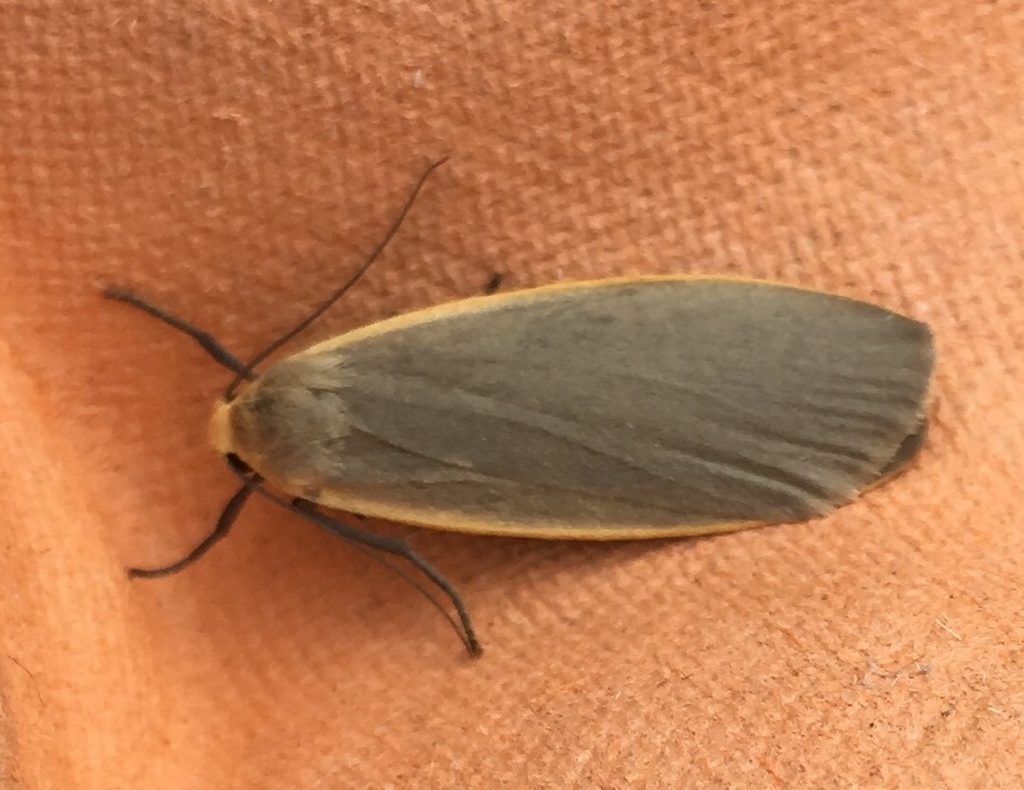
Dingy Footman
Eilema griseola
Insectstrong against fungi, fish
Common
Swarm
While active with another insect in play, each of its attacks also hits the opposing bench for 10, without knocking them out (20 with two others).
32

37
Dingy Footman
Eilema griseola
Insectstrong against fungi, fish
Common
While active with another insect in play, each of its attacks also hits the opposing bench for 10, without knocking them out (20 with two others).
Eilema griseola
Photo: © Paul Cook (original photo) · CC BY 4.0 (licence text) · cropped
Strong against: it deals 20% more damage to them. Weak against: these types deal 20% more damage to it.
Collita griseola, the dingy footman, is a moth of the family Erebidae. The species was first described by Jacob Hübner in 1803. It is found in Europe and North and South-East Asia.
The wingspan is 32–40 mm. The moth flies from May to August depending on the location.
The larvae feed on lichen.
This species has shown a spectacular increase in abundance in Britain during the period 1968 to 2007, like a number of moth species with larva that feed on lichens and algae. In Britain it was originally limited to southern fens and marshy areas, but has since spread northwards and now occupy a variety of habitats, including gardens.
Excerpt from the Wikipedia article Collita griseola, by its authors, under the CC BY-SA 4.0 licence.
No global status on the IUCN Red List: that’s what makes this card Common.
Every Common card has 100 points, shared between HP, ATK and DEF:
How they’re shared out:

 DEF 37