 …
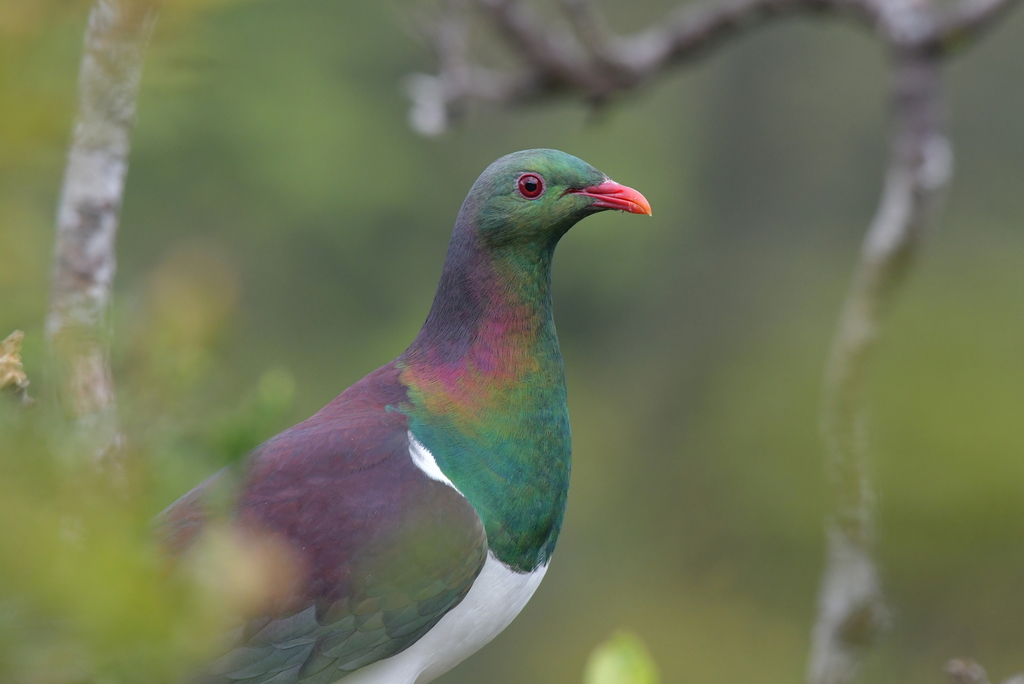
New Zealand Pigeon
Hemiphaga novaeseelandiae
Birdstrong against fish, reptiles
Common
Swoop
While active with another bird in play, it hits 6 harder on its first attack after entering play (12 with two others).
42

35
New Zealand Pigeon
Hemiphaga novaeseelandiae
Birdstrong against fish, reptiles
Common
While active with another bird in play, it hits 6 harder on its first attack after entering play (12 with two others).
Hemiphaga novaeseelandiae
Photo: © Christopher Stephens (original photo) · CC BY-SA 4.0 (licence text) · cropped
Strong against: it deals 20% more damage to them. Weak against: these types deal 20% more damage to it.
The kererū (Hemiphaga novaeseelandiae), also known as kūkupa (northern Māori dialects), New Zealand pigeon or wood pigeon, is a species of pigeon native to New Zealand. Johann Friedrich Gmelin described the bird in 1789 as a large, conspicuous pigeon up to 50 cm (20 in) in length and 550–850 g (19–30 oz) in weight, with a white breast and iridescent green–blue plumage. Two subspecies have been recognised; the second—the Norfolk pigeon of Norfolk Island—became extinct in the early 20th century. Kererū pairs are monogamous, breeding over successive seasons and remaining together when not breeding. They construct nests with twigs in trees, with a single egg clutch.
Found in a variety of habitats across the country, the kererū feeds mainly on fruits, as well as leaves, buds and flowers. Although widespread in both forest and urban habitats, its numbers have declined significantly since European colonisation and the arrival of invasive mammals, such as rats, stoats and possums. However, the results of nationwide bird surveys indicate that there has been a significant recovery in the population in suburban areas. As of 2022, the IUCN Red List classifies the species as least concern, while the Department of Conservation (DOC) classifies the kererū as "not threatened" but conservation dependent.
Abridged excerpt from the Wikipedia article Kererū, by its authors, under the CC BY-SA 4.0 licence.
Least Concern on the IUCN Red List: that’s what makes this card Common.
Every Common card has 100 points, shared between HP, ATK and DEF:
How they’re shared out:

 DEF 35