 …
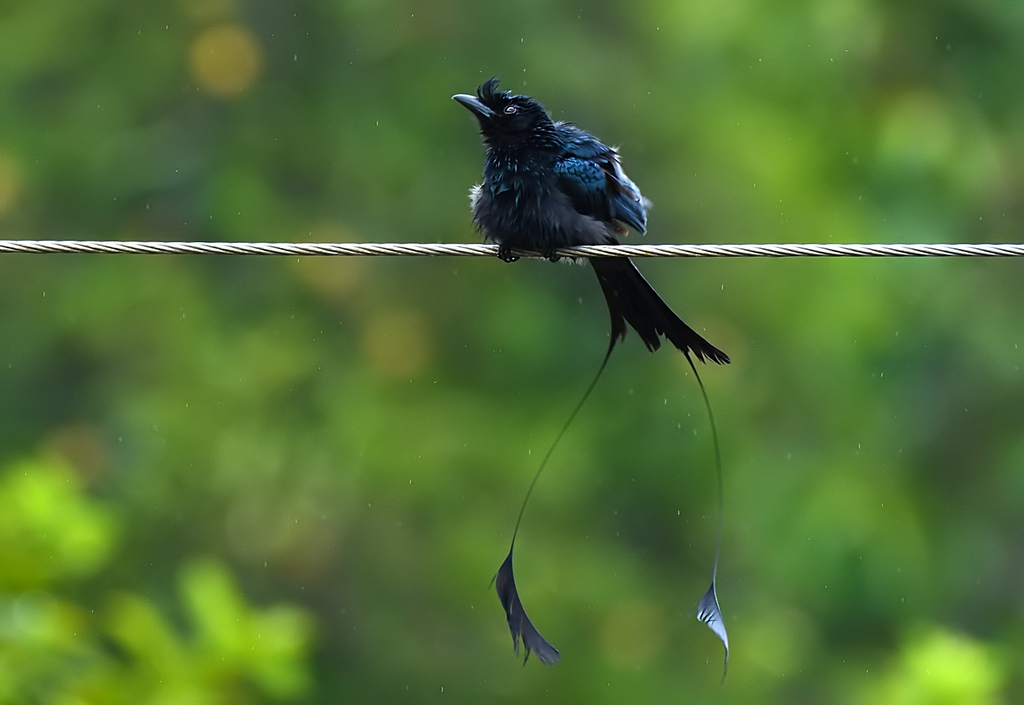
Greater Racket-tailed Drongo
Dicrurus paradiseus
Birdstrong against fish, reptiles
Common
Swoop
While active with another bird in play, it hits 6 harder on its first attack after entering play (12 with two others).
32

37
Greater Racket-tailed Drongo
Dicrurus paradiseus
Birdstrong against fish, reptiles
Common
While active with another bird in play, it hits 6 harder on its first attack after entering play (12 with two others).
Dicrurus paradiseus
Photo: © sunnyjosef (original photo) · CC BY 4.0 (licence text) · cropped
Strong against: it deals 20% more damage to them. Weak against: these types deal 20% more damage to it.
The greater racket-tailed drongo (Dicrurus paradiseus) is a medium-sized Asian bird which is distinctive in having elongated outer tail feathers with webbing restricted to the tips. They are placed along with other drongos in the family Dicruridae. They are conspicuous in the forest habitats often perching in the open and by attracting attention with a wide range of loud calls that include perfect imitations of many other birds. One hypothesis suggested is that these vocal imitations may help in the formation of mixed-species foraging flocks, a feature seen in forest bird communities where many insect feeders forage together. These drongos will sometimes steal insect prey caught or disturbed by other foragers in the flock and another idea is that vocal mimicry helps them in diverting the attention of smaller birds to aid their piracy. They are diurnal but are active well before dawn and late at dusk. Owing to their widespread distribution and distinctive regional variation, they have become iconic examples of speciation by isolation and genetic drift.
Excerpt from the Wikipedia article Greater racket-tailed drongo, by its authors, under the CC BY-SA 4.0 licence.
Least Concern on the IUCN Red List: that’s what makes this card Common.
Every Common card has 100 points, shared between HP, ATK and DEF:
How they’re shared out:

 DEF 37