 …
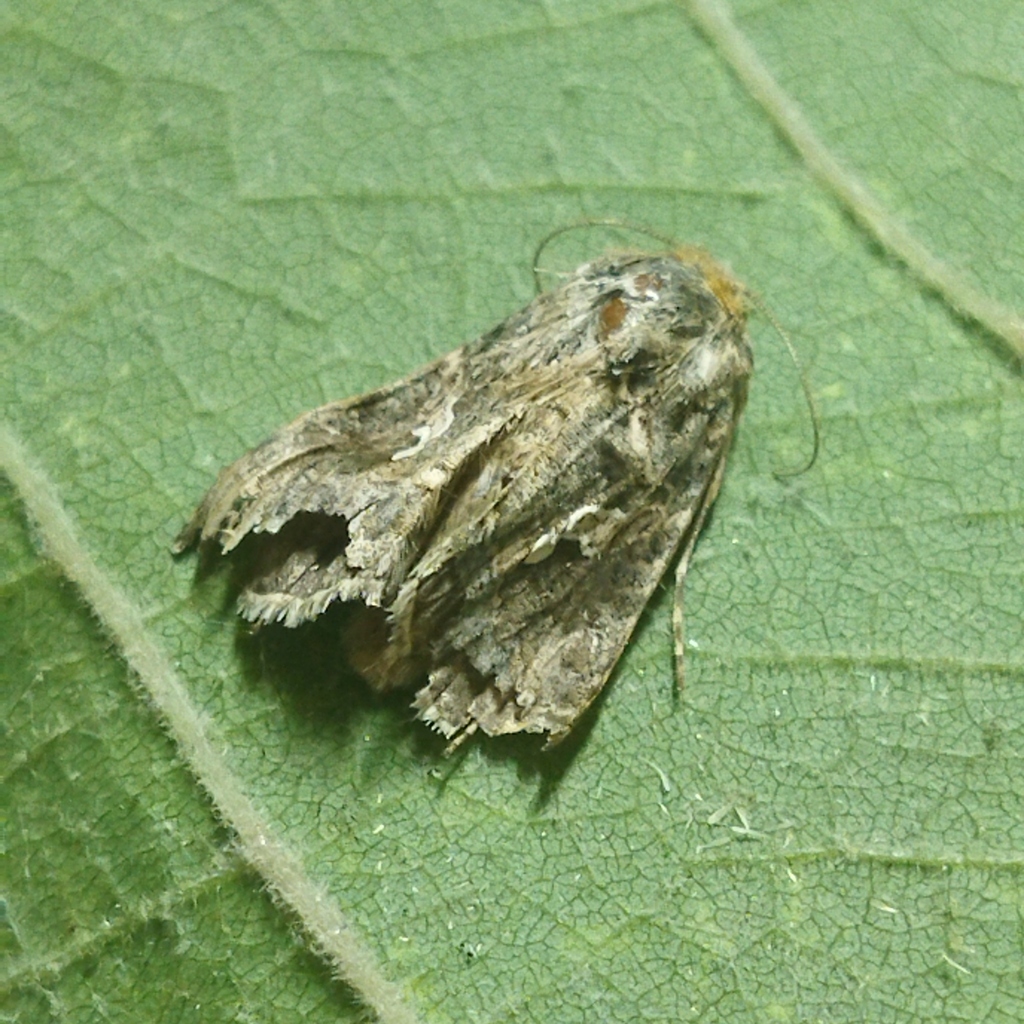
Cabbage Looper Moth
Trichoplusia ni
Insectstrong against fungi, fish
Common
Swarm
While active with another insect in play, each of its attacks also hits the opposing bench for 10, without knocking them out (20 with two others).
41

38
Cabbage Looper Moth
Trichoplusia ni
Insectstrong against fungi, fish
Common
While active with another insect in play, each of its attacks also hits the opposing bench for 10, without knocking them out (20 with two others).
Trichoplusia ni
Photo: © SteveM4560 (original photo) · CC BY 4.0 (licence text) · cropped
Strong against: it deals 20% more damage to them. Weak against: these types deal 20% more damage to it.
The cabbage looper (Trichoplusia ni) is a medium-sized moth in the family Noctuidae, a family commonly referred to as owlet moths. Its common name comes from its preferred host plants and distinctive crawling behavior. Cruciferous vegetables, such as cabbage, bok choy, and broccoli, are its main host plant; hence, the reference to cabbage in its common name. The larva is called a looper because it arches its back into a loop when it crawls.
While crucifers are preferred, over 160 plants can serve as hosts for the cabbage looper larvae. The adult cabbage looper is a migratory moth that can be found across North America and Eurasia, as far south as Florida and as far north as British Columbia. Its migratory behavior and wide range of host plants contribute to its broad distribution.
The cabbage looper larva is a minor vegetable pest, especially for crucifers. While it is not significantly destructive, it is becoming difficult to manage due to its broad distribution and resistance to many insecticides. Numerous methods are being researched in order to control this species.
Excerpt from the Wikipedia article Cabbage looper, by its authors, under the CC BY-SA 4.0 licence.
No global status on the IUCN Red List: that’s what makes this card Common.
Every Common card has 100 points, shared between HP, ATK and DEF:
How they’re shared out:

 DEF 38