
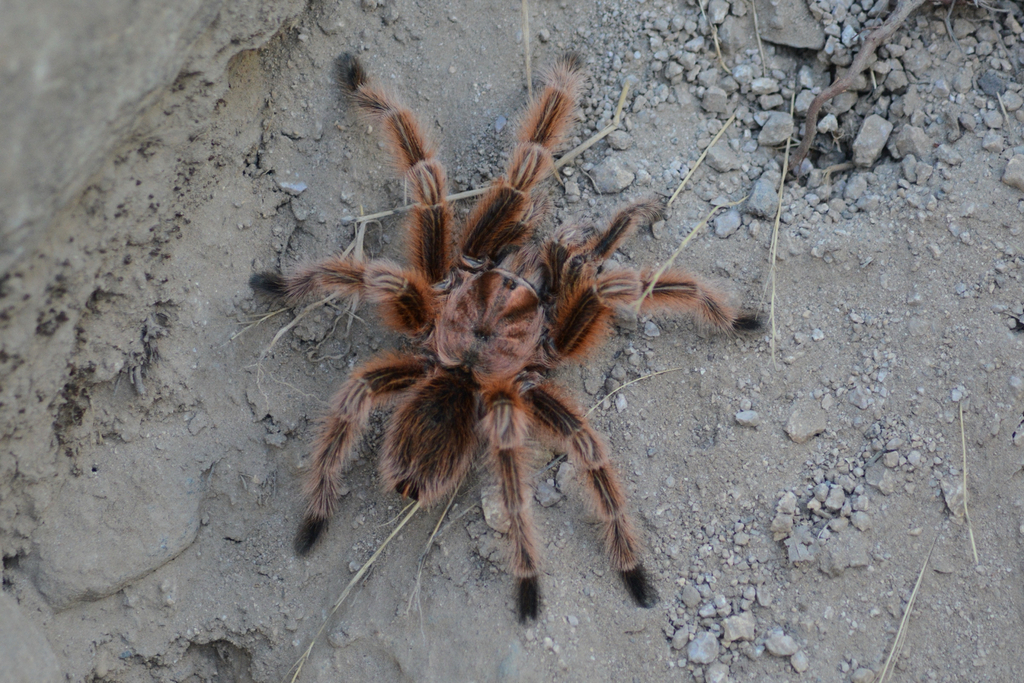
Chilean Rosehair Tarantula
Grammostola rosea
Arachnidstrong against insects, birds
Common
While active with another arachnid in play, its target loses 4 HP at the start of each of its turns, as long as it stays active (7 with two others).

Chilean Rosehair Tarantula
Grammostola rosea
Arachnidstrong against insects, birds
Common
While active with another arachnid in play, its target loses 4 HP at the start of each of its turns, as long as it stays active (7 with two others).
Grammostola rosea
Photo: Nicolás Garcés (original photo) · CC0 (licence text) · cropped
Strong against: it deals 20% more damage to them. Weak against: these types deal 20% more damage to it.
The Chilean rose tarantula (Grammostola rosea), also known as the rose hair tarantula, the Chilean fire tarantula, or the Chilean red-haired tarantula (depending on the color morph), is probably the most common species of tarantula available in American and European pet stores today, due to the large number of wild-caught specimens exported cheaply from their native Chile into the pet trade. The species is also known from Bolivia and Argentina.
G. rosea is a common pet of tarantula hobbyists. Females have been known to live as long as 20 years, but due to the limited time they have been available on the market (and hence for extensive study), they may live considerably longer than 20 years. In the past, considerable confusion existed between this species and Grammostola porteri, but in 2022 the World Spider Catalog revised the latter as a junior synonym of Grammostola rosea.
Excerpt from the Wikipedia article Chilean rose tarantula, by its authors, under the CC BY-SA 4.0 licence.
No global status on the IUCN Red List: that’s what makes this card Common.
Every Common card has 100 points, shared between HP, ATK and DEF:
How they’re shared out:

