 …
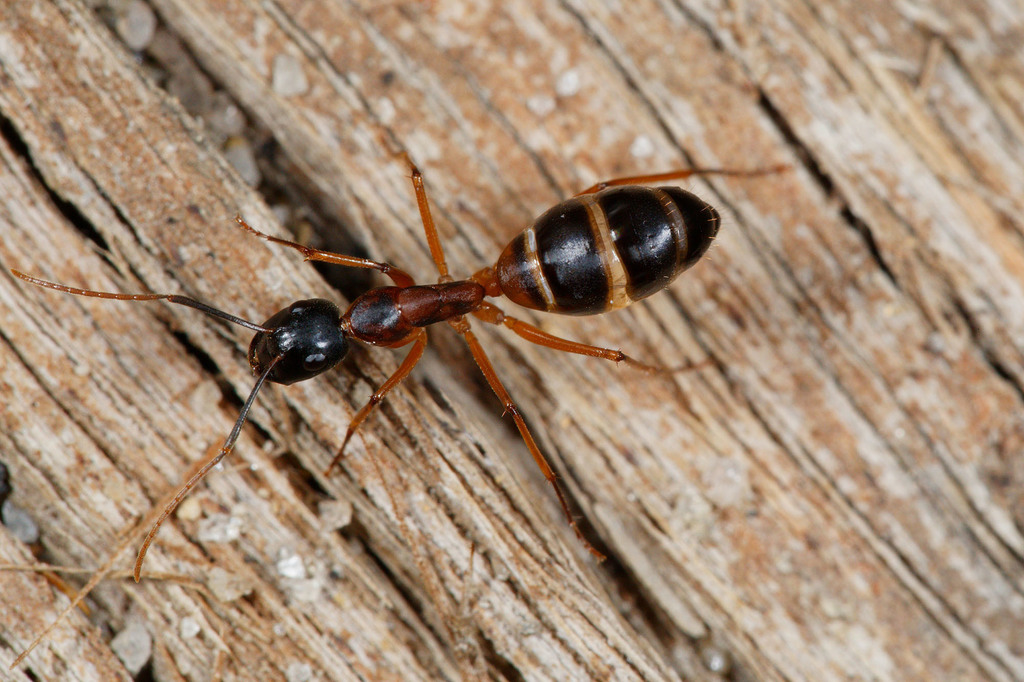
Banded Sugar Ant
Camponotus consobrinus
Insectstrong against fungi, fish
Common
Swarm
While active with another insect in play, each of its attacks also hits the opposing bench for 10, without knocking them out (20 with two others).
31

39
Banded Sugar Ant
Camponotus consobrinus
Insectstrong against fungi, fish
Common
While active with another insect in play, each of its attacks also hits the opposing bench for 10, without knocking them out (20 with two others).
Camponotus consobrinus
Photo: © Lek Khauv (original photo) · CC BY 4.0 (licence text) · cropped
Strong against: it deals 20% more damage to them. Weak against: these types deal 20% more damage to it.
The banded sugar ant (Camponotus consobrinus), also known as the sugar ant, is a species of ant native to Australia. A member of the genus Camponotus in the subfamily Formicinae, it was described by German entomologist Wilhelm Ferdinand Erichson in 1842. Its common name refers to the ant's liking for sugar and sweet food, as well as the distinctive orange-brown band that wraps around its gaster.
The ant is polymorphic and relatively large, with two different castes of workers: major workers (also known as soldiers), and minor workers. These two group of workers measure around 5 to 15 millimetres (0.2 to 0.6 in) in length, while the queen ants are even larger. Mainly nocturnal, banded sugar ants prefer a mesic habitat, and are commonly found in forests and woodlands. They also occur in urban areas, where they are considered a household pest. The ant's diet includes sweet secretions that are retrieved from aphids and other insects that it tends. This species is a competitor of the meat ant (Iridomyrmex purpureus); food robbery and nest-plugging are known to occur between these two ants. Workers prey on insects, killing them with a spray of formic acid. Banded sugar ants are preyed upon by other ants, echidnas, and birds. The eggs of this species were consumed by Indigenous Australians.
Excerpt from the Wikipedia article Banded sugar ant, by its authors, under the CC BY-SA 4.0 licence.
No global status on the IUCN Red List: that’s what makes this card Common.
Every Common card has 100 points, shared between HP, ATK and DEF:
How they’re shared out:

 DEF 39