 …
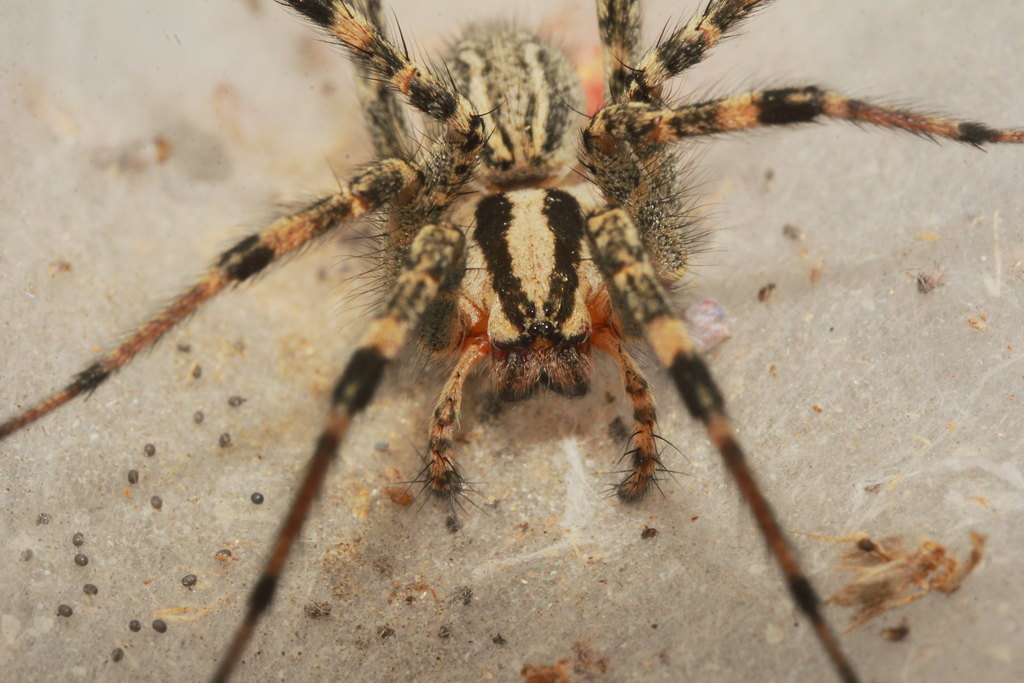
Desert Grass Spider
Agelenopsis aperta
Arachnidstrong against insects, birds
Common
Venom
While active with another arachnid in play, its target loses 4 HP at the start of each of its turns, as long as it stays active (7 with two others).
41

27
Desert Grass Spider
Agelenopsis aperta
Arachnidstrong against insects, birds
Common
While active with another arachnid in play, its target loses 4 HP at the start of each of its turns, as long as it stays active (7 with two others).
Agelenopsis aperta
Photo: © Juan Cruzado Cortés (original photo) · CC BY-SA 4.0 (licence text) · cropped
Strong against: it deals 20% more damage to them. Weak against: these types deal 20% more damage to it.
Agelenopsis aperta, also known as the desert grass spider or funnel-web spider, is a species of spider belonging to the family Agelenidae and the genus Agelenopsis. It is found in dry and arid regions across the southern United States and into northwestern Mexico. Their body is about 13–18 mm long and they have relatively long legs in order to run after their prey. Desert grass spiders can withstand very low temperatures even though they do not cold harden. It constructs the characteristic funnel-shaped webs in crevices where the funnel will fit, where they wait in the tube for prey which they can run after using their long legs. They often hunt for their prey at night.
A. aperta is known for its territoriality and will fight intruders to protect their space. A. aperta are mainly monogamous, and the male performs an elaborate courtship ritual that involves swaying his abdomen and releasing pheromones. The male's pheromones induce a cataplectic state in the female, and then once the female is active again, they begin to mate. Desert grass spiders inject venom into their prey which results in rapid paralysis. Bites to humans, however, are not well-studied and are currently considered harmless. The agatoxin present in its venom has been researched extensively and is known to block calcium channels.
Excerpt from the Wikipedia article Agelenopsis aperta, by its authors, under the CC BY-SA 4.0 licence.
No global status on the IUCN Red List: that’s what makes this card Common.
Every Common card has 100 points, shared between HP, ATK and DEF:
How they’re shared out:

 DEF 27