 …
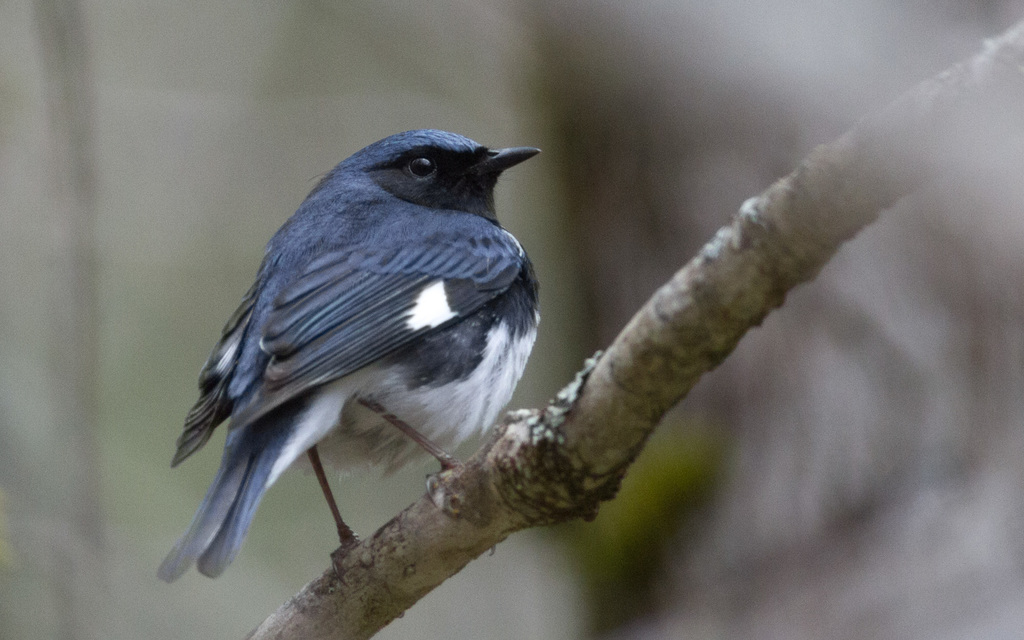
Black-throated Blue Warbler
Setophaga caerulescens
Birdstrong against fish, reptiles
Common
Swoop
While active with another bird in play, it hits 6 harder on its first attack after entering play (12 with two others).
33

39
Black-throated Blue Warbler
Setophaga caerulescens
Birdstrong against fish, reptiles
Common
While active with another bird in play, it hits 6 harder on its first attack after entering play (12 with two others).
Setophaga caerulescens
Photo: © Fyn Kynd (original photo) · CC BY-SA 4.0 (licence text) · cropped
Strong against: it deals 20% more damage to them. Weak against: these types deal 20% more damage to it.
The black-throated blue warbler (Setophaga caerulescens) is a small passerine bird of the New World warbler family. Its breeding ranges are located in the interior of deciduous and mixed coniferous forests in eastern North America. Over the cooler months, it migrates to islands in the Caribbean and Central America. It is very rarely found in western Europe, where it is considered to be a non-indigenous species. The black-throated blue warbler is sexually dimorphic; the adult male has a black face and cheeks, deep blue upperparts and white underparts, while the adult female is olive-brown above and light yellow below.
Predominantly insectivorous, the black-throated blue warbler supplements its diet with berries and seeds in winter. It builds its nests in thick shrubs and the closeness of its nesting sites to the ground make it a favored species for the study of warbler behavior in the wild. The black-throated blue warbler defends its territory against other birds of the same species for both nesting and winter habitats. As the black-throated blue warbler requires large, unbroken forest areas for nesting, its numbers are declining.
Excerpt from the Wikipedia article Black-throated blue warbler, by its authors, under the CC BY-SA 4.0 licence.
Least Concern on the IUCN Red List: that’s what makes this card Common.
Every Common card has 100 points, shared between HP, ATK and DEF:
How they’re shared out:

 DEF 39