
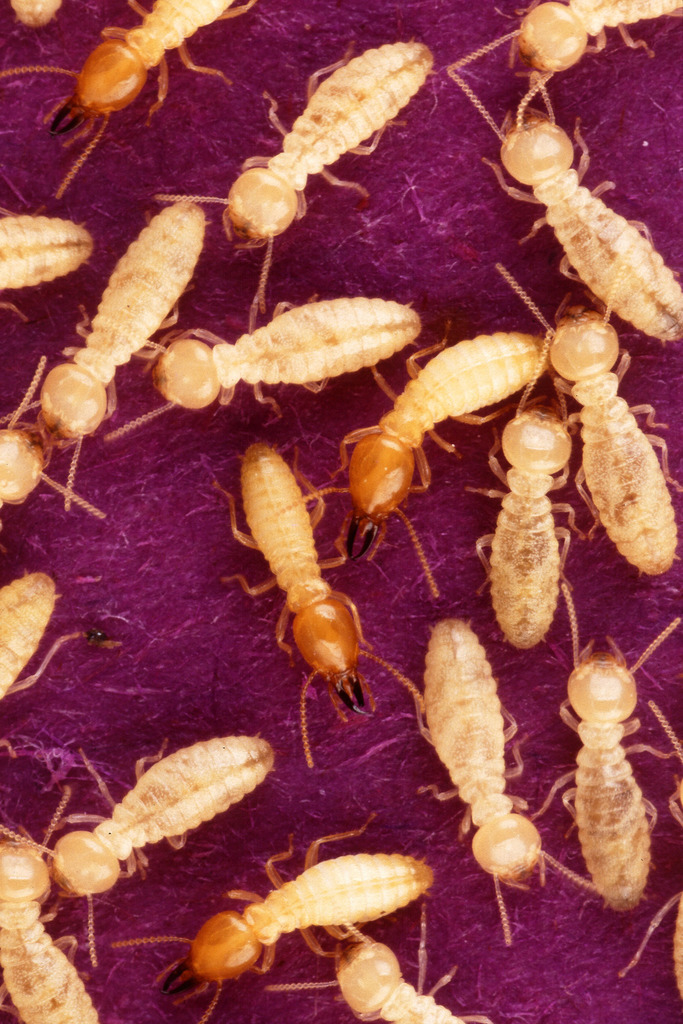
Formosan subterranean termite
Coptotermes formosanus
Insectstrong against fungi, fish
Common
While active with another insect in play, each of its attacks also hits the opposing bench for 10, without knocking them out (20 with two others).

Formosan subterranean termite
Coptotermes formosanus
Insectstrong against fungi, fish
Common
While active with another insect in play, each of its attacks also hits the opposing bench for 10, without knocking them out (20 with two others).
Coptotermes formosanus
Photo: Photo by Scott Bauer. (original photo) · public domain (licence text) · cropped
Strong against: it deals 20% more damage to them. Weak against: these types deal 20% more damage to it.
The Formosan termite (Coptotermes formosanus) is a species of termite local to southern China and introduced to Taiwan (formerly known as Formosa, where it gets its name), Japan, South Africa, Sri Lanka, Hawaii, and the continental United States.
The Formosan termite is often nicknamed the super-termite because of its destructive habits due to the large size of its colonies and its ability to consume wood at a rapid rate. Populations of these termites have become large enough to appear on New Orleans' weather radars.
A mature Formosan colony can consume as much as 13 ounces of wood a day (about 400 g) and can severely damage a structure in as little as three months.
Formosan termites infest a wide variety of structures (including boats and high-rise condominiums) and can damage trees. In the United States, along with another species, Coptotermes gestroi, introduced from Southeast Asia, they are responsible for tremendous damage to property resulting in large treatment and repair costs.
Excerpt from the Wikipedia article Formosan subterranean termite, by its authors, under the CC BY-SA 4.0 licence.
No global status on the IUCN Red List: that’s what makes this card Common.
Every Common card has 100 points, shared between HP, ATK and DEF:
How they’re shared out:

