 …
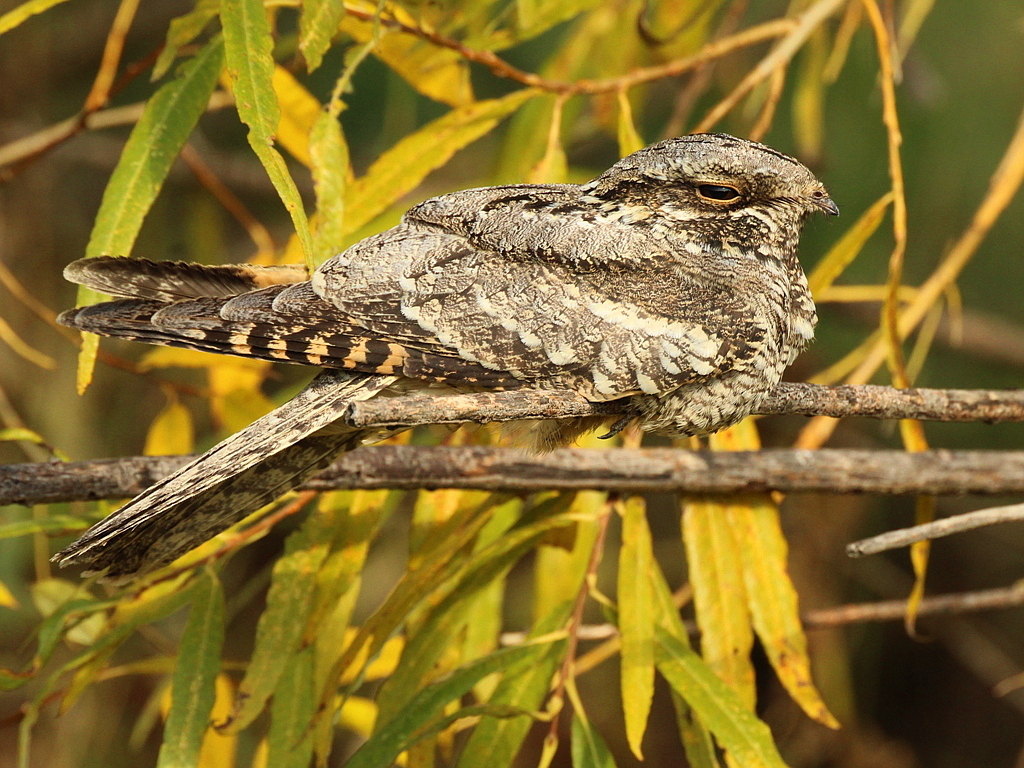
Eurasian Nightjar
Caprimulgus europaeus
Birdstrong against fish, reptiles
Common
Swoop
While active with another bird in play, it hits 6 harder on its first attack after entering play (12 with two others).
31

38
Eurasian Nightjar
Caprimulgus europaeus
Birdstrong against fish, reptiles
Common
While active with another bird in play, it hits 6 harder on its first attack after entering play (12 with two others).
Caprimulgus europaeus
Photo: © Andrew Bazdyrev (original photo) · CC BY 4.0 (licence text) · cropped
Strong against: it deals 20% more damage to them. Weak against: these types deal 20% more damage to it.
The European nightjar (Caprimulgus europaeus), common goatsucker, Eurasian nightjar or just nightjar is a crepuscular and nocturnal bird in the nightjar family that breeds across most of Europe and the Palearctic to Mongolia and Northwestern China. The Latin generic name refers to the old myth that the nocturnal nightjar suckled from goats, causing them to cease to give milk. The six subspecies differ clinally, the birds becoming smaller and paler towards the east of the range. All populations are migratory, wintering in sub-Saharan Africa. Their densely patterned grey and brown plumage makes individuals difficult to see in the daytime when they rest on the ground or perch motionless along a branch, although the male shows white patches in the wings and tail as he flies at night.
The preferred habitat is dry, open country with some trees and small bushes, such as heaths, forest clearings or newly planted woodland. The male European nightjar occupies a territory in spring and advertises his presence with a distinctive sustained churring trill from a perch. He patrols his territory with wings held in a V and tail fanned, chasing intruders while wing-clapping and calling. Wing clapping also occurs when the male chases the female in a spiralling display flight. The European nightjar does not build a nest, and its two grey and brown blotched eggs are laid directly on the ground; they hatch after about 17–21 days and the downy chicks fledge in another 16–17 days.
Abridged excerpt from the Wikipedia article European nightjar, by its authors, under the CC BY-SA 4.0 licence.
Least Concern on the IUCN Red List: that’s what makes this card Common.
Every Common card has 100 points, shared between HP, ATK and DEF:
How they’re shared out:

 DEF 38