 …
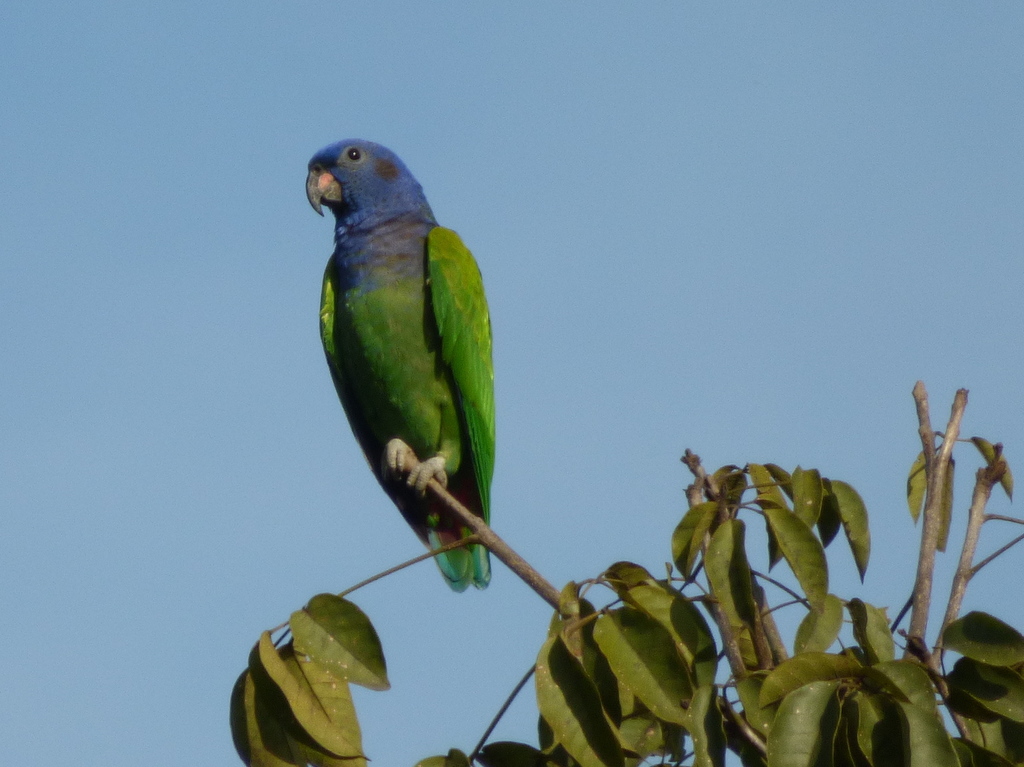
Blue-headed Parrot
Pionus menstruus
Birdstrong against fish, reptiles
Common
Swoop
While active with another bird in play, it hits 6 harder on its first attack after entering play (12 with two others).
40

37
Blue-headed Parrot
Pionus menstruus
Birdstrong against fish, reptiles
Common
While active with another bird in play, it hits 6 harder on its first attack after entering play (12 with two others).
Pionus menstruus
Photo: © Luis G Restrepo (original photo) · CC BY 4.0 (licence text) · cropped
Strong against: it deals 20% more damage to them. Weak against: these types deal 20% more damage to it.
The blue-headed parrot, also known as the blue-headed pionus (Pionus menstruus) is a medium-sized parrot of about 27 cm (11 in) in length. The body is mostly green, with a blue head and neck, and red undertail coverts. It is a resident in tropical and subtropical South America and southern Central America, from Costa Rica, Venezuela and the Caribbean island of Trinidad south to Bolivia and Brazil.
Its habitat is forest and semi-open country, including cultivated areas. It is largely restricted to humid or semi-humid regions, but locally extends into drier habitats, at least along rivers. The blue-headed parrot lays three to five white eggs in a tree cavity.
Blue-headed parrots are noisy birds and make light, high-pitched squeaking sweenk calls. They eat fruit and seeds, and sometimes grain. They roost communally in palm and other trees, and large numbers can be seen at the roost sites at dawn and dusk.
Blue-headed parrots are popular as pets. Compared to other parrot species (like amazons) they are very quiet. They are affectionate, but not known for their talking ability.
Excerpt from the Wikipedia article Blue-headed parrot, by its authors, under the CC BY-SA 4.0 licence.
Least Concern on the IUCN Red List: that’s what makes this card Common.
Every Common card has 100 points, shared between HP, ATK and DEF:
How they’re shared out:

 DEF 37