 …
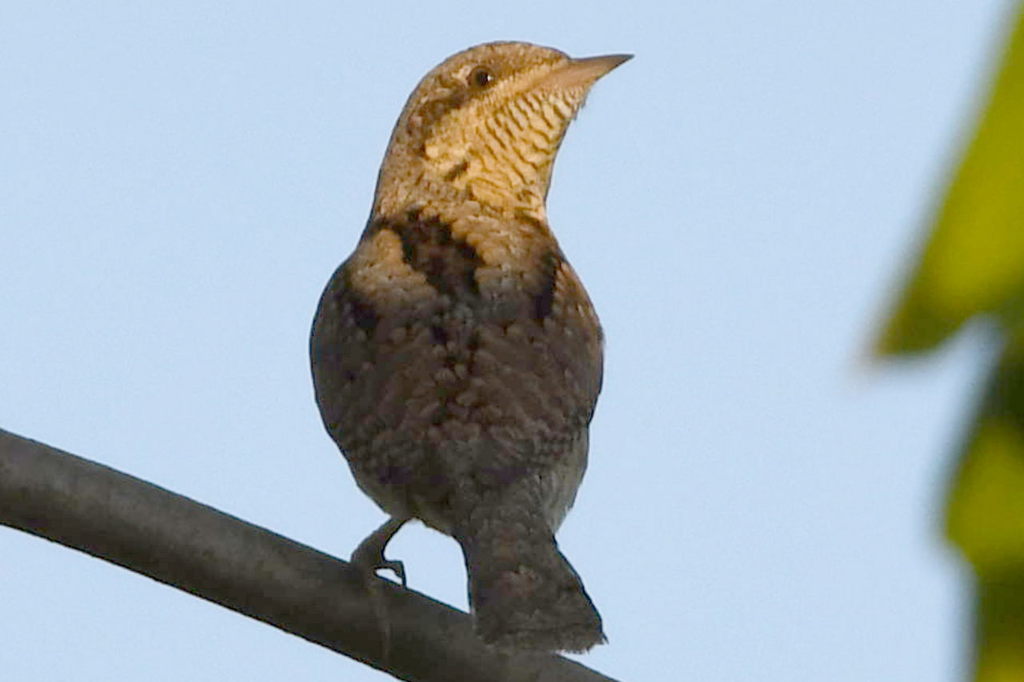
Eurasian Wryneck
Jynx torquilla
Birdstrong against fish, reptiles
Common
Swoop
While active with another bird in play, it hits 6 harder on its first attack after entering play (12 with two others).
29

35
Eurasian Wryneck
Jynx torquilla
Birdstrong against fish, reptiles
Common
While active with another bird in play, it hits 6 harder on its first attack after entering play (12 with two others).
Jynx torquilla
Photo: iNaturalist (original photo) · CC0 (licence text) · cropped
Strong against: it deals 20% more damage to them. Weak against: these types deal 20% more damage to it.
The Eurasian wryneck or northern wryneck (Jynx torquilla) is a species of wryneck in the woodpecker family. It mainly breeds in temperate regions of Europe and Asia. Most populations are migratory, wintering in tropical Africa and in southern Asia from Iran to the Indian subcontinent, but some are resident in northwestern Africa. It is a bird of open countryside, woodland and orchards.
Eurasian wrynecks measure about 16–18 cm (6.3–7.1 in) in length and have bills shorter and less dagger-like than those of other woodpeckers. Their upperparts are barred and mottled in shades of pale brown with rufous and blackish bars and wider black streaks. Their underparts are cream speckled and spotted with brown. Their chief prey is ants and other insects, which they find in decaying wood or on the ground. The eggs are white as is the case with many birds that nest in holes and a clutch of seven to ten eggs is laid during May and June.
These birds get their English name from their ability to turn their heads through almost 180 degrees. When disturbed at the nest, they use this snake-like head twisting and hissing as a threat display.
Excerpt from the Wikipedia article Eurasian wryneck, by its authors, under the CC BY-SA 4.0 licence.
Least Concern on the IUCN Red List: that’s what makes this card Common.
Every Common card has 100 points, shared between HP, ATK and DEF:
How they’re shared out:

 DEF 35