 …
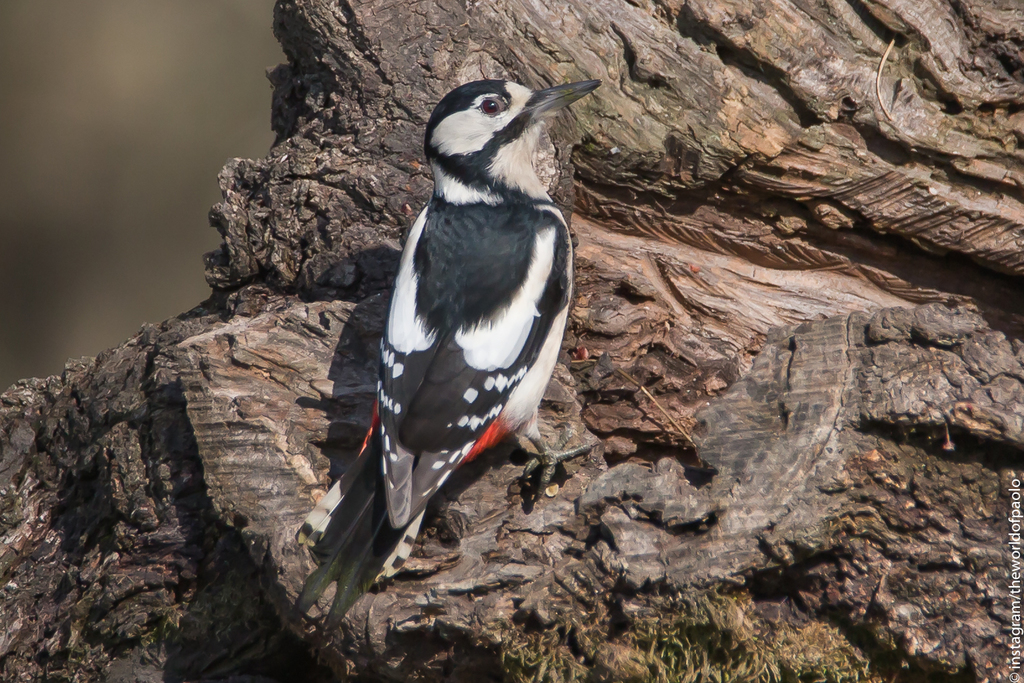
Great Spotted Woodpecker
Dendrocopos major
Birdstrong against fish, reptiles
Common
Swoop
While active with another bird in play, it hits 6 harder on its first attack after entering play (12 with two others).
33

32
Great Spotted Woodpecker
Dendrocopos major
Birdstrong against fish, reptiles
Common
While active with another bird in play, it hits 6 harder on its first attack after entering play (12 with two others).
Dendrocopos major
Photo: © Paolo Zucca (original photo) · CC BY 4.0 (licence text) · cropped
Strong against: it deals 20% more damage to them. Weak against: these types deal 20% more damage to it.
The great spotted woodpecker (Dendrocopos major) is a medium-sized woodpecker with pied black and white plumage and a red patch on the lower belly. Males and young birds also have red markings on the neck or head. This species is found across the Palearctic including parts of North Africa. Across most of its range it is resident, but in the north some will migrate if the conifer cone crop fails. Some individuals have a tendency to wander, leading to the recolonisation of Ireland in the first decade of the 21st century and to vagrancy to North America. Great spotted woodpeckers chisel into trees to find food or excavate nest holes, and also drum for contact and territorial advertisement; like other woodpeckers, they have anatomical adaptations to manage the physical stresses from the hammering action.
This woodpecker occurs in all types of woodlands and eats a variety of foods, being capable of extracting seeds from pine cones, insect larvae from inside trees or eggs and chicks of other birds from their nests. It breeds in holes excavated in living or dead trees, unlined apart from wood chips. The typical clutch is four to six glossy white eggs. Both parents incubate the eggs, feed the chicks, and keep the nest clean. When the young fledge they are fed by the adults for about ten days, each parent taking responsibility for feeding part of the brood.
Abridged excerpt from the Wikipedia article Great spotted woodpecker, by its authors, under the CC BY-SA 4.0 licence.
Least Concern on the IUCN Red List: that’s what makes this card Common.
Every Common card has 100 points, shared between HP, ATK and DEF:
How they’re shared out:

 DEF 32