 …
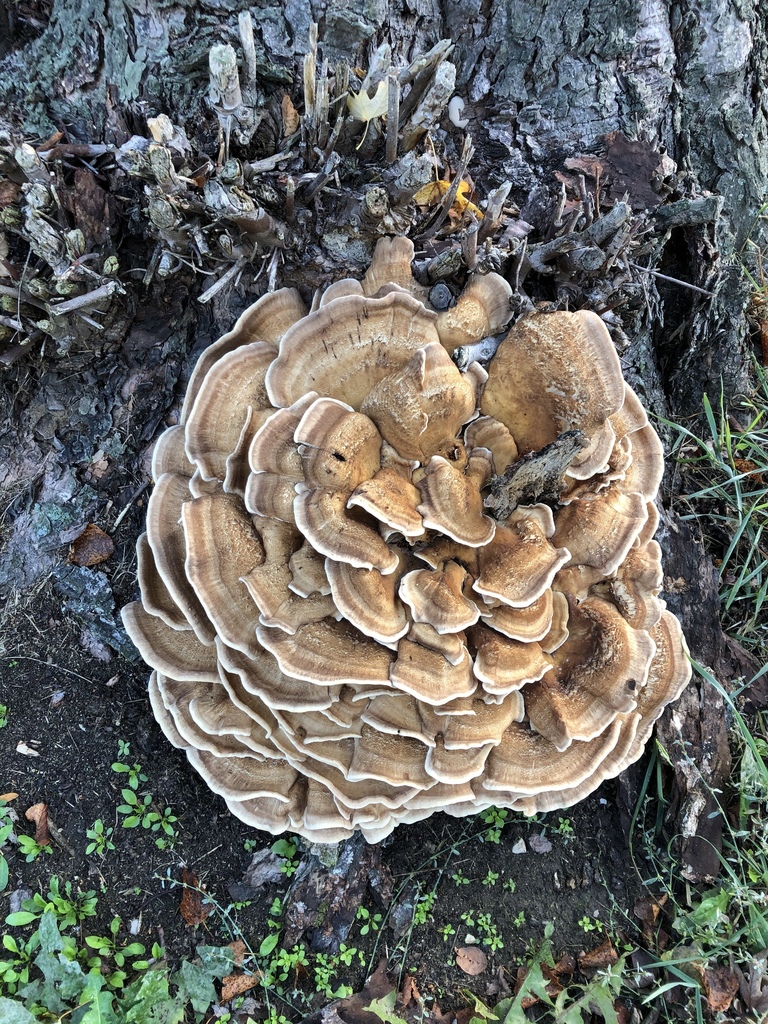
Giant Polypore
Meripilus giganteus
Fungusstrong against amphibians, reptiles
Common
Mycelium
While active with another fungus in play, it regains 5 HP at the start of your turn (8 with two others).
40

27
Giant Polypore
Meripilus giganteus
Fungusstrong against amphibians, reptiles
Common
While active with another fungus in play, it regains 5 HP at the start of your turn (8 with two others).
Meripilus giganteus
Photo: © Katrin Simon (original photo) · CC BY 4.0 (licence text) · cropped
Strong against: it deals 20% more damage to them. Weak against: these types deal 20% more damage to it.
Meripilus giganteus is a polypore fungus in the family Meripilaceae. It causes a white rot in various types of broadleaved trees, particularly beech (Fagus), but also Abies, Picea, Pinus, Quercus and Ulmus species. This bracket fungus, commonly known as the giant polypore or black-staining polypore, is often found in large clumps at the base of trees, although fruiting bodies are sometimes found some distance away from the trunk, parasitizing the roots. M. giganteus has a circumboreal distribution in the northern Hemisphere, and is widely distributed in Europe. In the field, it is recognizable by the large, multi-capped fruiting body, as well as its pore surface that quickly darkens black when bruised or injured.
Excerpt from the Wikipedia article Meripilus giganteus, by its authors, under the CC BY-SA 4.0 licence.
No global status on the IUCN Red List: that’s what makes this card Common.
Every Common card has 100 points, shared between HP, ATK and DEF:
How they’re shared out:

 DEF 27