 …
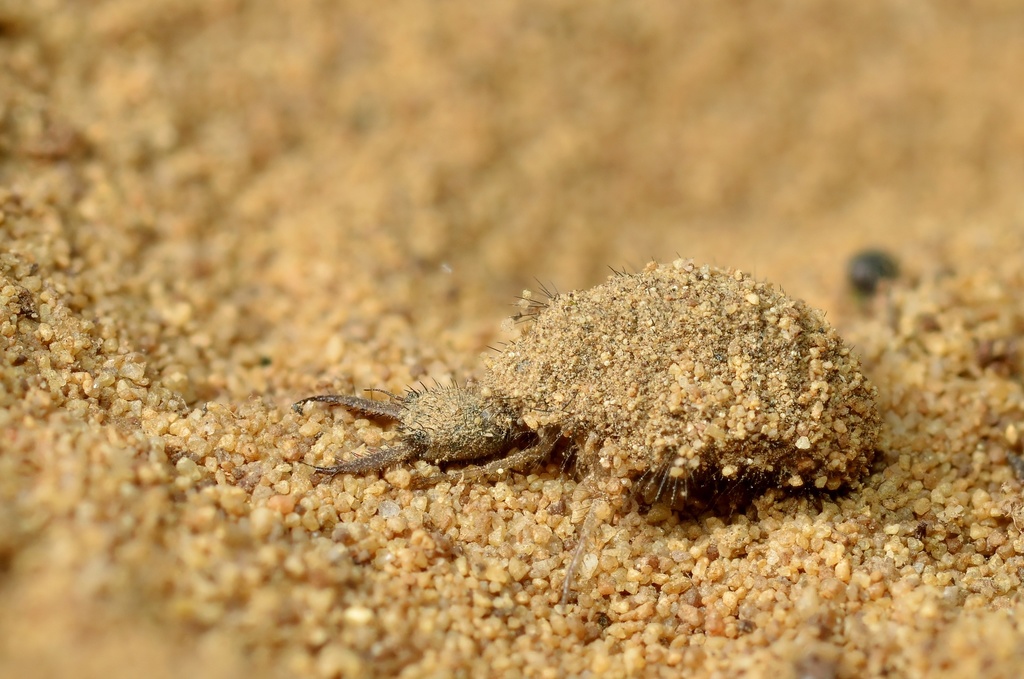
Myrmeleon formicarius
Myrmeleon formicarius
Insectstrong against fungi, fish
Common
Swarm
While active with another insect in play, each of its attacks also hits the opposing bench for 10, without knocking them out (20 with two others).
30

39
Myrmeleon formicarius
Myrmeleon formicarius
Insectstrong against fungi, fish
Common
While active with another insect in play, each of its attacks also hits the opposing bench for 10, without knocking them out (20 with two others).
Myrmeleon formicarius
Photo: © Gilles San Martin (original photo) · CC BY-SA 4.0 (licence text) · cropped
Strong against: it deals 20% more damage to them. Weak against: these types deal 20% more damage to it.
Myrmeleon formicarius is a species of antlion native to Belgium and other parts of Europe. It is known to be present in the Genk nature reserve Opglabbekerzavel in 2020, according to the species inventory prepared for the city by the ecological study/advice company Mieco-effect.
According to the European Environment Agency, this species has not yet been assessed by the IUCN and as such lacks an official conservation threat status. Despite there being little species-specific information available online, the Encyclopædia Britannica describes it as "the best known of the 65 described species" of antlions.
It has been suggested that there is a great deal of confusion in the distinction of individuals between M. formicarius and Euroleon nostras. The easiest hallmark of M. formicarius larvae is its largely black head, but this can easily be mis-seen due to fine humus/substrate particles clinging to their many head hairs. For adults, the lack of black flecks in their wing colours is an identifying feature.
A 2020 study by Wu et al., sequenced their mitochondrial genome and found that they are most closely related to Myrmeleon immanis, another antlion species.
The common name of M. formicarius in Dutch is Zwartkopmierenleeuw, which translates to "Blackhead antlion".
Excerpt from the Wikipedia article Myrmeleon formicarius, by its authors, under the CC BY-SA 4.0 licence.
No global status on the IUCN Red List: that’s what makes this card Common.
Every Common card has 100 points, shared between HP, ATK and DEF:
How they’re shared out:

 DEF 39