 …
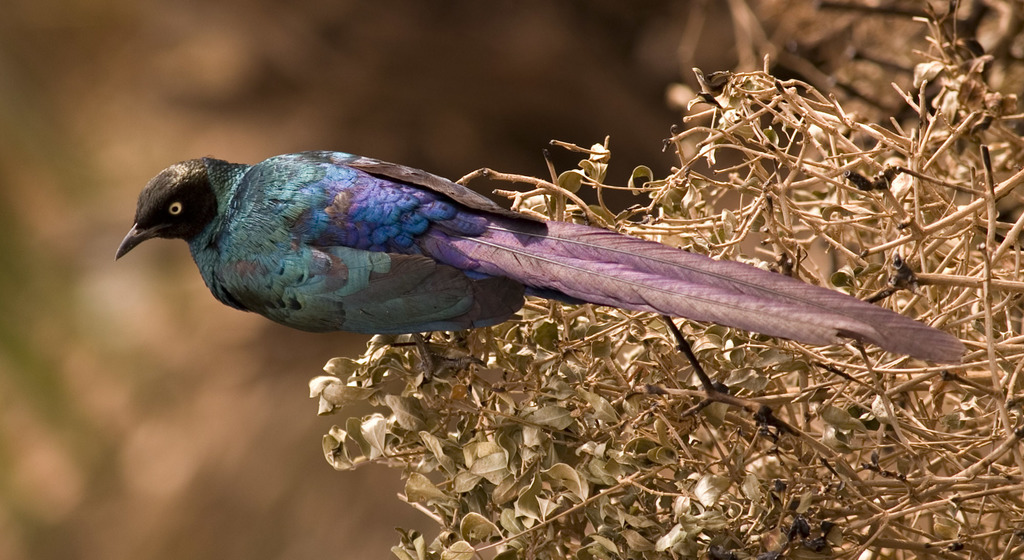
Long-tailed Glossy Starling
Lamprotornis caudatus
Birdstrong against fish, reptiles
Common
Swoop
While active with another bird in play, it hits 6 harder on its first attack after entering play (12 with two others).
30

38
Long-tailed Glossy Starling
Lamprotornis caudatus
Birdstrong against fish, reptiles
Common
While active with another bird in play, it hits 6 harder on its first attack after entering play (12 with two others).
Lamprotornis caudatus
Photo: © Thom Haslam (original photo) · CC BY 4.0 (licence text) · cropped
Strong against: it deals 20% more damage to them. Weak against: these types deal 20% more damage to it.
The long-tailed glossy starling (Lamprotornis caudatus) is a member of the starling family of birds. It is a resident breeder in tropical Africa from Senegal east to Sudan.
This common passerine is typically found in open woodland and cultivation. The long-tailed glossy starling builds a nest in a hole. The normal clutch is two to four eggs.
This ubiquitous bird is gregarious and noisy, with a harsh grating call.
The adults of these 54 cm (21 in) long birds have metallic green upperparts, violet underparts and a 34 cm (13 in) long purple tail. The face is black with a yellow eye. The sexes are similar, but juveniles are duller, with a brownish tone to the plumage.
Like most starlings, the long-tailed glossy starling is an omnivore, eating fruit and insects.
Excerpt from the Wikipedia article Long-tailed glossy starling, by its authors, under the CC BY-SA 4.0 licence.
Least Concern on the IUCN Red List: that’s what makes this card Common.
Every Common card has 100 points, shared between HP, ATK and DEF:
How they’re shared out:

 DEF 38