 …
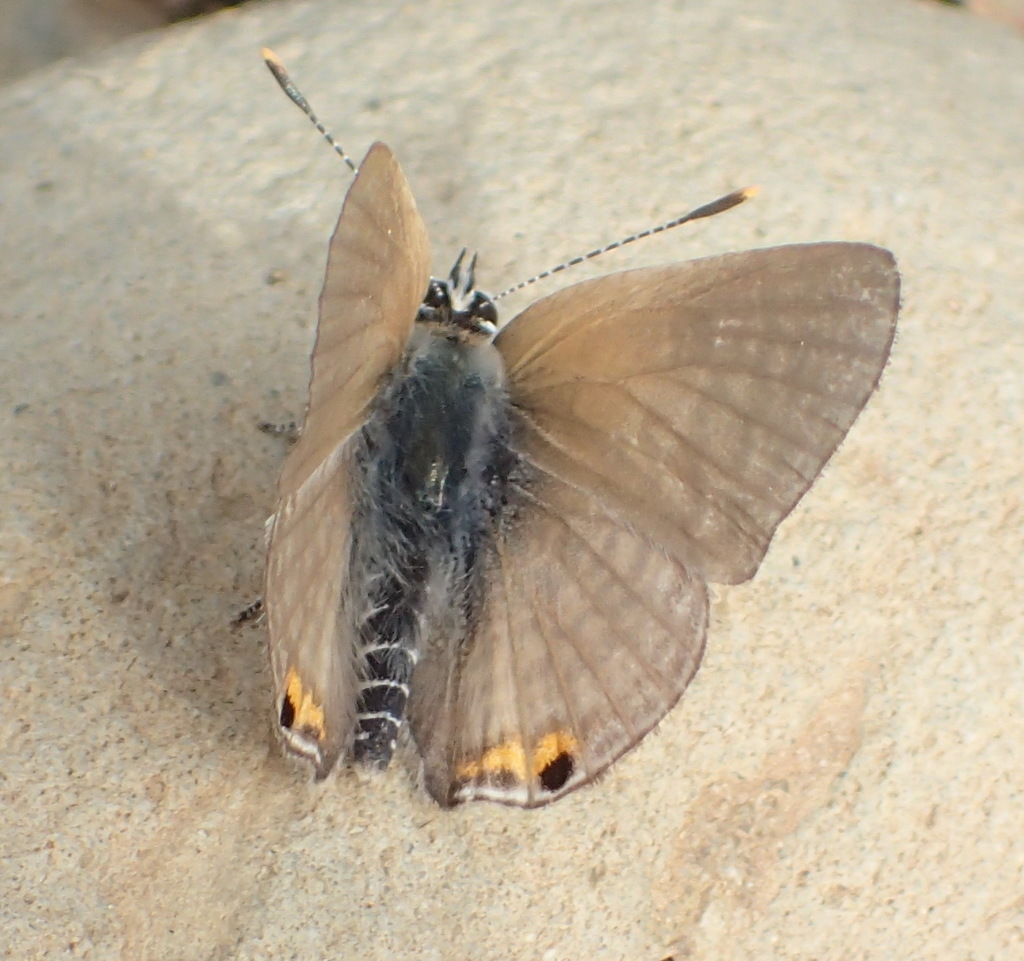
Leaden Hairtail
Anthene amarah
Insectstrong against fungi, fish
Common
Swarm
While active with another insect in play, each of its attacks also hits the opposing bench for 10, without knocking them out (20 with two others).
39

39
Leaden Hairtail
Anthene amarah
Insectstrong against fungi, fish
Common
While active with another insect in play, each of its attacks also hits the opposing bench for 10, without knocking them out (20 with two others).
Anthene amarah
Photo: © Nicola van Berkel (original photo) · CC BY-SA 4.0 (licence text) · cropped
Strong against: it deals 20% more damage to them. Weak against: these types deal 20% more damage to it.
Anthene amarah, the black-striped hairtail, leaden hairtail or leaden ciliate blue, is a butterfly of the family Lycaenidae. It is found in tropical Africa and Arabia (up to Aqaba). The habitat consists of savanna and occasionally open areas in the forest zone.
The wingspan is 21–26 mm for males and 23–29 mm for females. Adults are on wing year-round, with a peak in summer.
The larvae feed on Acacia species, including and Acacia karroo, Acacia sieberana, and Vachellia gerrardi. They are associated with a number of ants, including Crematogaster bequaerti var. saga, Lepisiota affinis, Camponotus, and Myrmicaria species.
Torben Larsen developed a species numbering system for his 2005 publication Butterflies of West Africa. This species is #516. The 'Larsen' numbers have since been used with permission in A Sharp Eye on Butterflies of Ghana.
Excerpt from the Wikipedia article Anthene amarah, by its authors, under the CC BY-SA 4.0 licence.
Least Concern on the IUCN Red List: that’s what makes this card Common.
Every Common card has 100 points, shared between HP, ATK and DEF:
How they’re shared out:

 DEF 39