 …
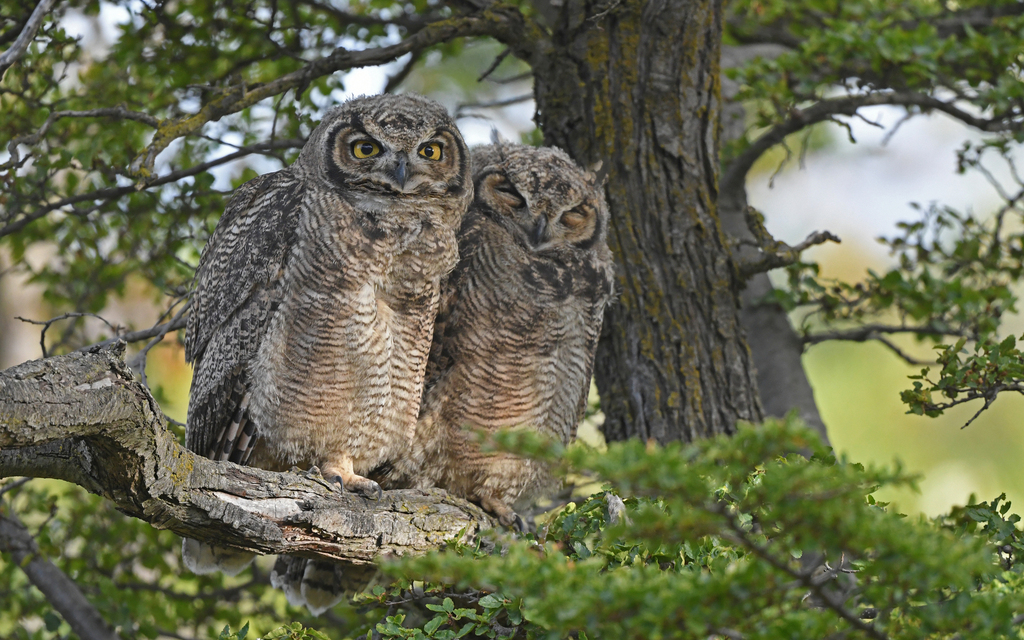
Magellanic Horned Owl
Bubo magellanicus
Birdstrong against fish, reptiles
Common
Swoop
While active with another bird in play, it hits 6 harder on its first attack after entering play (12 with two others).
29

36
Magellanic Horned Owl
Bubo magellanicus
Birdstrong against fish, reptiles
Common
While active with another bird in play, it hits 6 harder on its first attack after entering play (12 with two others).
Bubo magellanicus
Photo: © Christoph Moning (original photo) · CC BY 4.0 (licence text) · cropped
Strong against: it deals 20% more damage to them. Weak against: these types deal 20% more damage to it.
The Magellanic horned owl or lesser horned owl (Bubo magellanicus) is a large owl of the genus Bubo found in southern South America, extending north to the central Andes. It has traditionally been classified as a subspecies of the great horned owl (Bubo virginianus), but is now treated as a separate species based on differences in voice and size and because of the genetic distance between the two.
It is about 45 cm (18 in) long with birds in the north of the range being largest. It has broad wings and a large head with two "ear" tufts. The plumage is mainly grey-brown but is quite variable in colour. The underparts are pale with narrow grey-brown bars and the breast has dark blotches. There is a black border to the facial disc and white stripes above the yellow eyes. The great horned owl is similar but larger with stronger feet and bill, broader bars on the underparts and longer ear-tufts.
The deep hooting call consists of a double-note followed by a loud, vibrating note. The bird's local name tucúquere is imitative of the call.
Abridged excerpt from the Wikipedia article Magellanic horned owl, by its authors, under the CC BY-SA 4.0 licence.
Least Concern on the IUCN Red List: that’s what makes this card Common.
Every Common card has 100 points, shared between HP, ATK and DEF:
How they’re shared out:

 DEF 36