 …
Dusky Thrush
Turdus eunomus
Birdstrong against fish, reptiles
Common
Swoop
While active with another bird in play, it hits 6 harder on its first attack after entering play (12 with two others).
32

38
Dusky Thrush
Turdus eunomus
Birdstrong against fish, reptiles
Common
While active with another bird in play, it hits 6 harder on its first attack after entering play (12 with two others).
Turdus eunomus
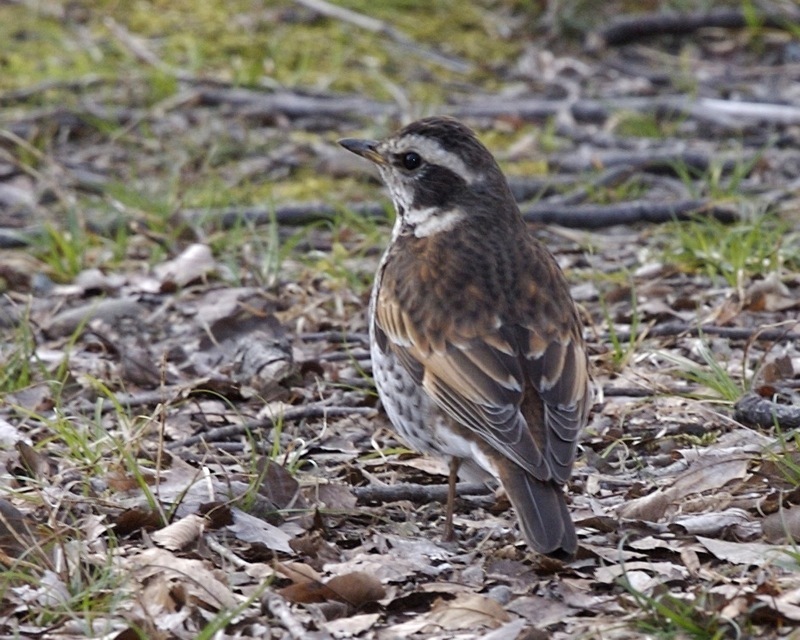
Photo: © Lip Kee (original photo) · CC BY-SA 4.0 (licence text) · cropped
Strong against: it deals 20% more damage to them. Weak against: these types deal 20% more damage to it.
The dusky thrush (Turdus eunomus) is a member of the thrush family which breeds eastwards from central Siberia to Kamchatka wintering in Korea, Japan, South China and Myanmar. It is closely related to the more southerly breeding Naumann's thrush T. naumanni; the two have often been regarded as conspecific. The scientific name comes from Latin Turdus, "thrush" and Ancient Greek eunomos, "orderly".
This species breeds in open woodland areas, but unlike Naumann's thrush, the dusky thrush is more tolerant of mountainous and tundra-edge habitats. This species is strongly migratory, wintering south to southeast Asia, principally in China and neighbouring countries. It is a rare vagrant to western Europe. In December 2016 a sighting of one in the Derbyshire in the United Kingdom brought hundreds of birdwatchers to see it.
It nests in trees, laying 3-5 eggs in an untidy but neatly lined nest. Migrating birds and wintering birds often form small flocks. It is omnivorous, eating a wide range of insects, especially mosquitoes, earthworms and berries.
This is a medium-sized but stocky thrush, reminiscent in structure of a small fieldfare. The underwing is reddish brown, and there is a pale supercilium.
Dusky thrush has a dark brown back and rump; the face, breast, and flank spots rump are black and the belly and undertail are white. Naumann's thrush in comparison has a paler brown back and head; the face, breast, flank spots and rump are reddish, and the belly and undertail are white.
Abridged excerpt from the Wikipedia article Dusky thrush, by its authors, under the CC BY-SA 4.0 licence.
Least Concern on the IUCN Red List: that’s what makes this card Common.
Every Common card has 100 points, shared between HP, ATK and DEF:
How they’re shared out:

 DEF 38