 …
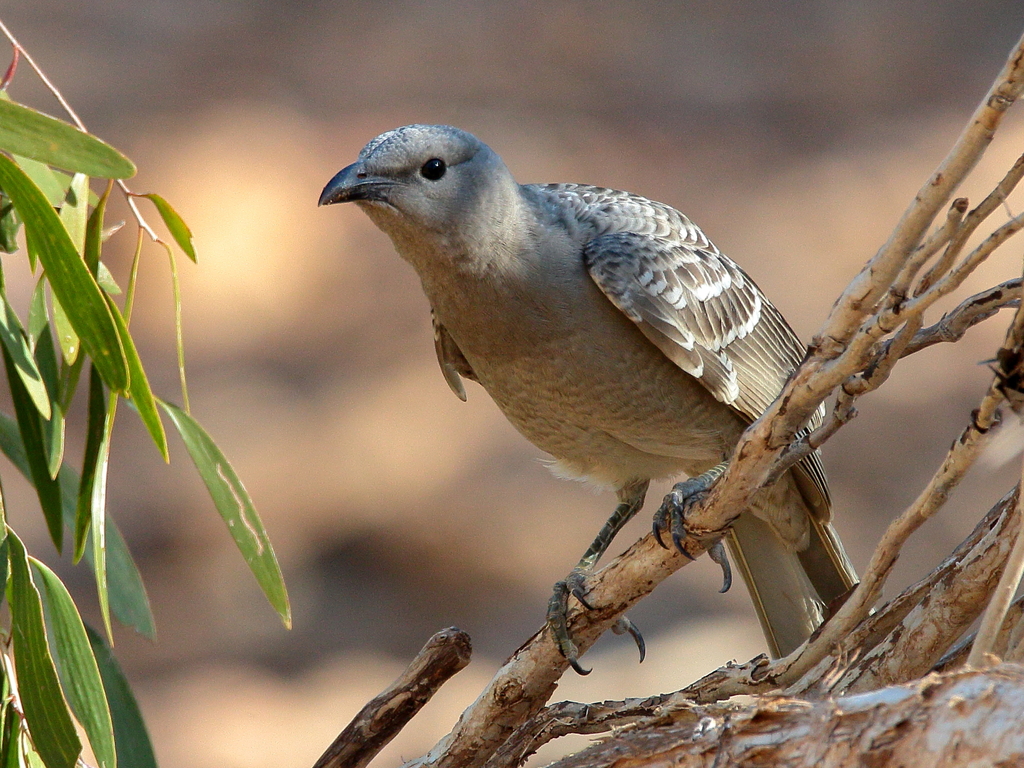
Great Bowerbird
Chlamydera nuchalis
Birdstrong against fish, reptiles
Common
Swoop
While active with another bird in play, it hits 6 harder on its first attack after entering play (12 with two others).
31

36
Great Bowerbird
Chlamydera nuchalis
Birdstrong against fish, reptiles
Common
While active with another bird in play, it hits 6 harder on its first attack after entering play (12 with two others).
Chlamydera nuchalis
Photo: © Graham Winterflood (original photo) · CC BY-SA 4.0 (licence text) · cropped
Strong against: it deals 20% more damage to them. Weak against: these types deal 20% more damage to it.
The great bowerbird (Chlamydera nuchalis) is a common and conspicuous resident of northern Australia, from the area around Broome across the Top End to Cape York Peninsula and as far south as Mount Isa and Townsville. Favoured habitat is a broad range of forest and woodland, and the margins of vine forests, monsoon forest, and mangrove swamps.
As with most members of the bowerbird family, breeding considerations dominate the lifecycle: females nest inconspicuously and raise their young alone, while the males spend most of the year building, maintaining, improving, defending, and above all displaying from their bowers. Only a male with a successful bower can attract mates.
The great bowerbird is the largest of the bowerbird family and is 33 to 38 cm long and fawny grey in colour. Males have a small but conspicuous pink crest on the nape of the neck.
Excerpt from the Wikipedia article Great bowerbird, by its authors, under the CC BY-SA 4.0 licence.
Least Concern on the IUCN Red List: that’s what makes this card Common.
Every Common card has 100 points, shared between HP, ATK and DEF:
How they’re shared out:

 DEF 36