 …
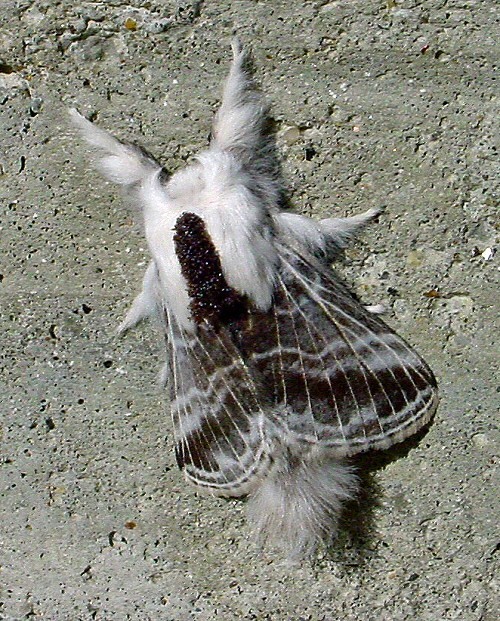
Large Tolype Moth
Tolype velleda
Insectstrong against fungi, fish
Common
Swarm
While active with another insect in play, each of its attacks also hits the opposing bench for 10, without knocking them out (20 with two others).
39

37
Large Tolype Moth
Tolype velleda
Insectstrong against fungi, fish
Common
While active with another insect in play, each of its attacks also hits the opposing bench for 10, without knocking them out (20 with two others).
Tolype velleda
Photo: © Michael K. Oliver, Ph.D. (original photo) · CC BY 4.0 (licence text) · cropped
Strong against: it deals 20% more damage to them. Weak against: these types deal 20% more damage to it.
Tolype velleda, the large tolype moth or velleda lappet moth, is a species of moth of the family Lasiocampidae. It was first described by Caspar Stoll in 1791. The species is found from Nova Scotia to central Florida, west to Texas and north to Ontario. Out of the United States, they can also be found in low and littoral areas of the Iberian Peninsula and North Africa from Egypt to the Atlantic coast of Morocco.
The wingspan is 32–58 mm. The females are larger than the males. When the wings are opened, they appear to be dark gray with wavy bands running across. When the wings are closed, the white lines become less visible, but the pattern is still there and remains the same. Adults are on wing from June to November in one generation per year.
The larvae feed on various broadleaf trees and shrubs, including Malus, Fraxinus, Populus, Tilia, Fagus, Betula, Prunus, and Quercus species. The larvae can be identified by its dull gray color, and a flap that is present on its pro legs that disappears as it matures. Larvae can be found from June to August.
Common host plants of the Tolype Velleda are apple, plum, cherry, apricot, almond, birch, poplar, oak, beech, and citrus trees. Eggs are placed on leaves of host plants. Feeding is most active in summer months.
Excerpt from the Wikipedia article Tolype velleda, by its authors, under the CC BY-SA 4.0 licence.
No global status on the IUCN Red List: that’s what makes this card Common.
Every Common card has 100 points, shared between HP, ATK and DEF:
How they’re shared out:

 DEF 37