 …
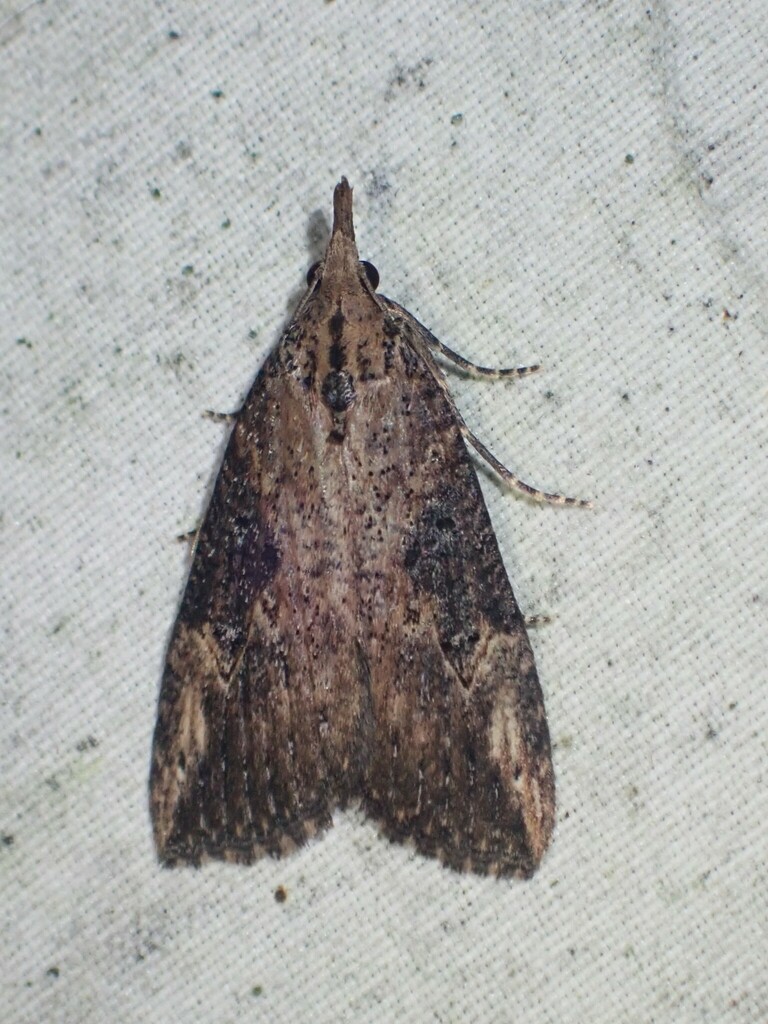
Hop Vine Snout
Hypena humuli
Insectstrong against fungi, fish
Common
Swarm
While active with another insect in play, each of its attacks also hits the opposing bench for 10, without knocking them out (20 with two others).
39

39
Hop Vine Snout
Hypena humuli
Insectstrong against fungi, fish
Common
While active with another insect in play, each of its attacks also hits the opposing bench for 10, without knocking them out (20 with two others).
Hypena humuli
Photo: © Louis Imbeau (original photo) · CC BY 4.0 (licence text) · cropped
Strong against: it deals 20% more damage to them. Weak against: these types deal 20% more damage to it.
Hypena humuli, the hop looper or hop vine moth, is a moth of the family Erebidae. The species was first described by Thaddeus William Harris in 1841. It is found from coast to coast in Canada south in the east to Florida and Arkansas in the west to California. It is apparently absent from the south-central states. In Canada it is only absent from Newfoundland and Labrador, Prince Edward Island and the far north.
The wingspan is 25–32 mm. The moth flies all year round in the south and west and from April to November in the northeast. There are two generations per year northward over most of the east.
The larva, or hop worm, is about an inch long when full grown, of a greenish-white color, watery looking or semi transparent, and slightly striped and dotted, having fourteen legs. The mouth is yellowish, and the tips of the jaws black. The larvae appear early in June, and continue until late in August. They feed on Laportea species, hop, nettle and wood nettle.
Excerpt from the Wikipedia article Hypena humuli, by its authors, under the CC BY-SA 4.0 licence.
No global status on the IUCN Red List: that’s what makes this card Common.
Every Common card has 100 points, shared between HP, ATK and DEF:
How they’re shared out:

 DEF 39