 …
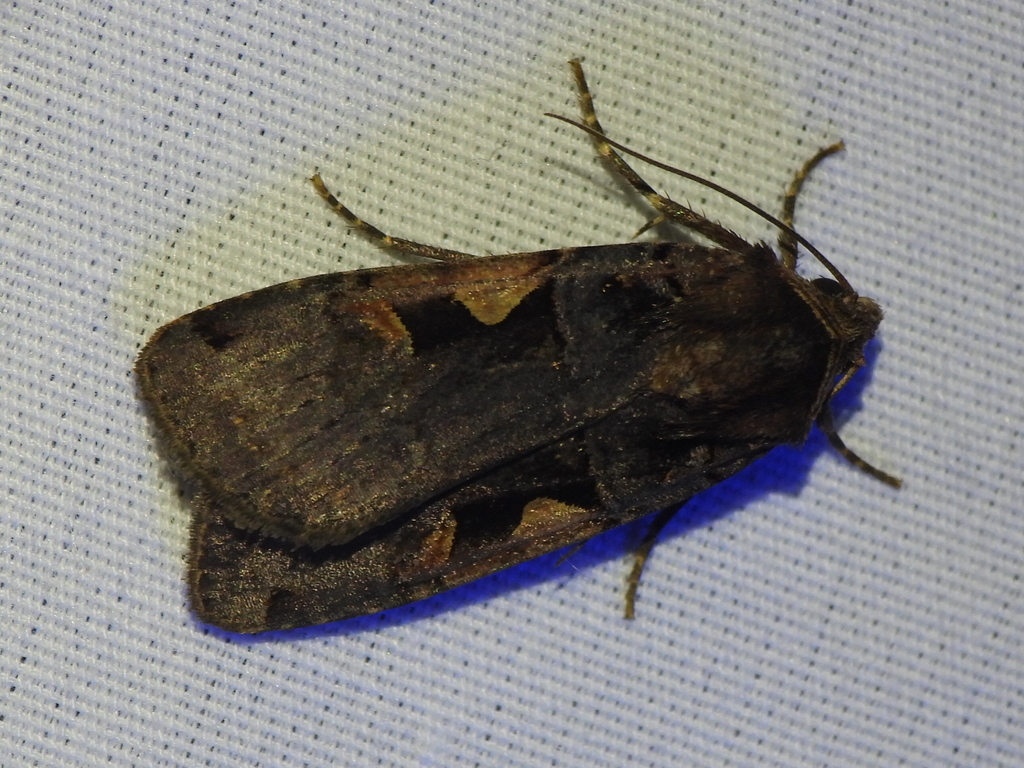
Greater Black-letter Dart
Xestia dolosa
Insectstrong against fungi, fish
Common
Swarm
While active with another insect in play, each of its attacks also hits the opposing bench for 10, without knocking them out (20 with two others).
40

39
Greater Black-letter Dart
Xestia dolosa
Insectstrong against fungi, fish
Common
While active with another insect in play, each of its attacks also hits the opposing bench for 10, without knocking them out (20 with two others).
Xestia dolosa
Photo: © Sam Kieschnick (original photo) · CC BY 4.0 (licence text) · cropped
Strong against: it deals 20% more damage to them. Weak against: these types deal 20% more damage to it.
Xestia dolosa, known by the names greater black-letter dart, woodland spotted cutworm and spotted cutworm, is a moth of the family Noctuidae. (The common name spotted cutworm is also used for larvae of Xestia c-nigrum.) It is found in North America from the Canadian provinces of New Brunswick and Prince Edward Island to Florida, west to Texas, and north to North Dakota and Manitoba.
The wingspan is about 40 mm. The moth flies from May to October in two generations in the South and from July to August in one generation in the North.
The larva feeds on various crop plants, including barley, clovers, corn, and tobacco, as well as apples and maples.
Excerpt from the Wikipedia article Xestia dolosa, by its authors, under the CC BY-SA 4.0 licence.
No global status on the IUCN Red List: that’s what makes this card Common.
Every Common card has 100 points, shared between HP, ATK and DEF:
How they’re shared out:

 DEF 39