 …
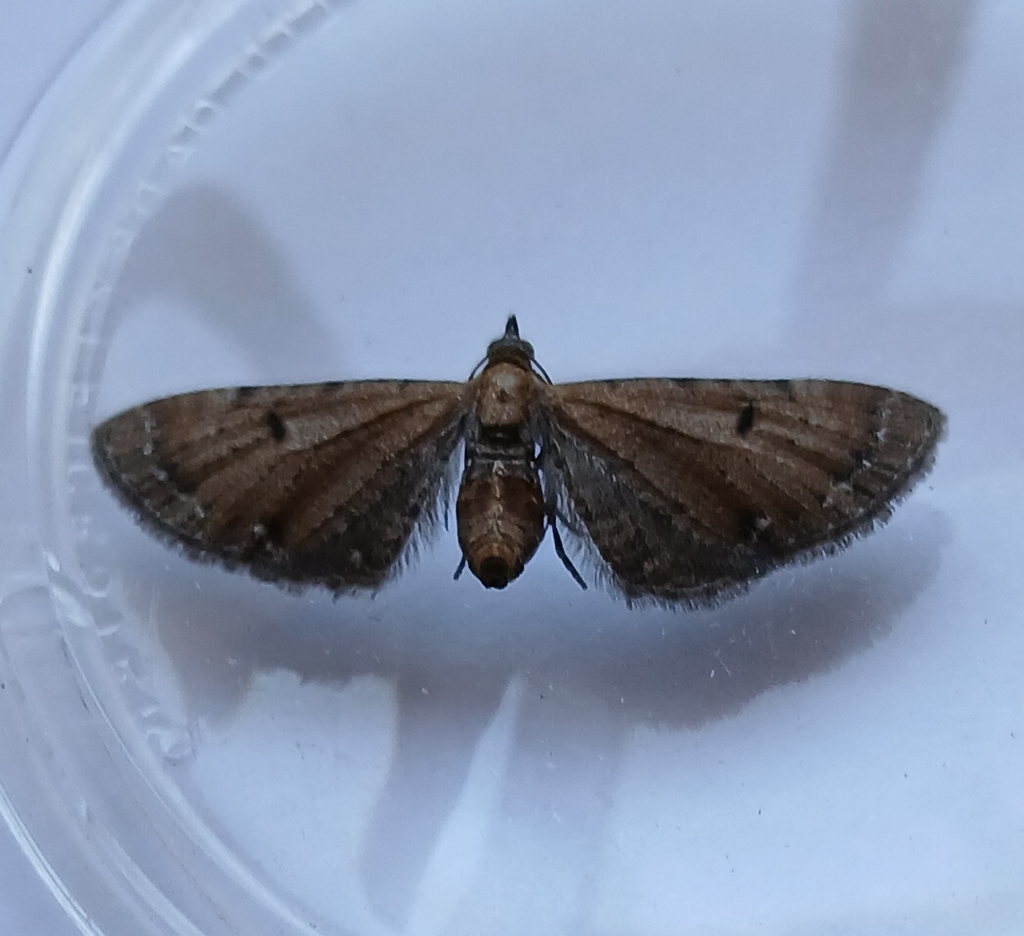
Wormwood Pug
Eupithecia absinthiata
Insectstrong against fungi, fish
Common
Swarm
While active with another insect in play, each of its attacks also hits the opposing bench for 10, without knocking them out (20 with two others).
41

37
Wormwood Pug
Eupithecia absinthiata
Insectstrong against fungi, fish
Common
While active with another insect in play, each of its attacks also hits the opposing bench for 10, without knocking them out (20 with two others).
Eupithecia absinthiata
Photo: © Jacqueline Worthington (original photo) · CC BY 4.0 (licence text) · cropped
Strong against: it deals 20% more damage to them. Weak against: these types deal 20% more damage to it.
The wormwood pug (Eupithecia absinthiata) is a moth of the family Geometridae. The species was first described by Carl Alexander Clerck in 1759. It is a common species across the Palearctic region as well as North America.
The wingspan is 21–23 mm and the forewings are warm brown with two black spots along the costa with a black discal spot completing a distinctive triangle. There is a pale narrow line near the fringe with a distinct whitish spot near the tornus, although this is not as prominent as in the rather similar currant pug. The hindwings are greyish brown.ab. obscura Dietze (Kassimov, Central Russia) is much darker, the forewing described as sepia-coloured.
Adult larvae are smooth and elongated. They adapt to the basic colour of the respective food plant and are accordingly greenish, cream-colored or brownish colored and usually show a reddish-brown diamond-like pattern on the back. Sometimes light green, almost unmarked specimens also appear.
The yellow-brown pupa is provided with greenish wing sheaths. At the cremaster there are eight hook bristles, the middle pair of which is strongly formed.
Eupithecia absinthiata requires examination of a genital preparation for certain identification.
The species flies at night in June and July and is attracted to light.
Abridged excerpt from the Wikipedia article Wormwood pug, by its authors, under the CC BY-SA 4.0 licence.
No global status on the IUCN Red List: that’s what makes this card Common.
Every Common card has 100 points, shared between HP, ATK and DEF:
How they’re shared out:

 DEF 37