 …
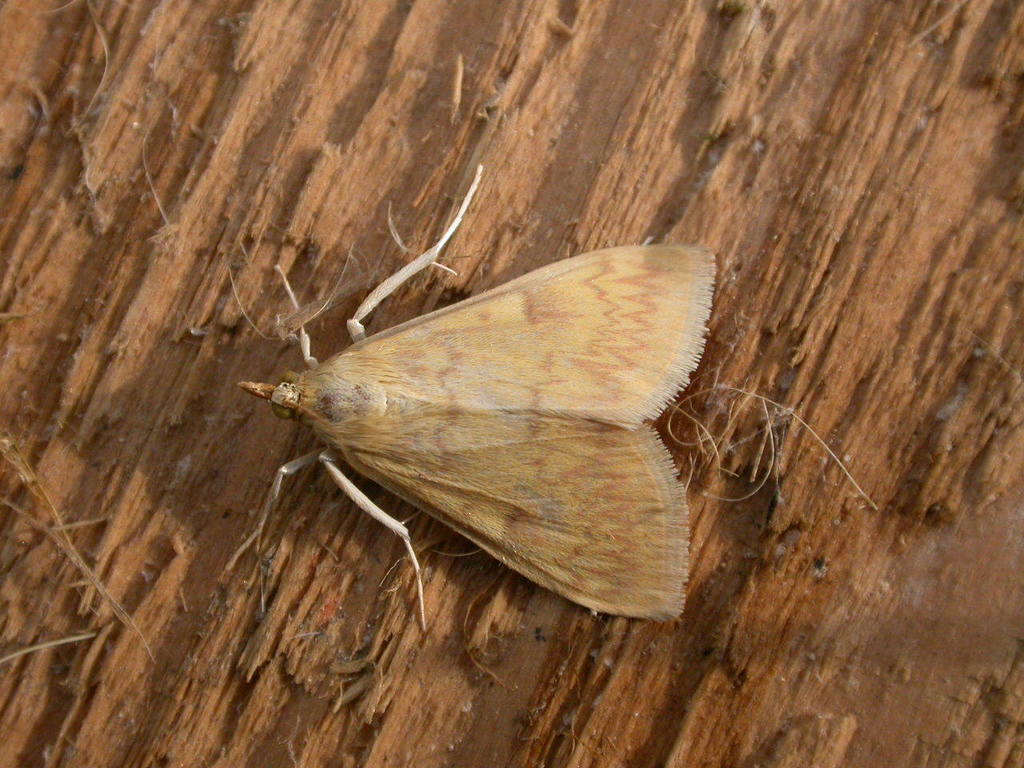
European Corn Borer Moth
Ostrinia nubilalis
Insectstrong against fungi, fish
Common
Swarm
While active with another insect in play, each of its attacks also hits the opposing bench for 10, without knocking them out (20 with two others).
41

38
European Corn Borer Moth
Ostrinia nubilalis
Insectstrong against fungi, fish
Common
While active with another insect in play, each of its attacks also hits the opposing bench for 10, without knocking them out (20 with two others).
Ostrinia nubilalis
Photo: © Donald Hobern (original photo) · CC BY 4.0 (licence text) · cropped
Strong against: it deals 20% more damage to them. Weak against: these types deal 20% more damage to it.
The European corn borer (Ostrinia nubilalis), also known as the European corn worm or European high-flyer, is a moth of the family Crambidae. It is a pest of grain, particularly maize (Zea mays). The insect is native to Europe, originally infesting varieties of millet, including broom corn. The European corn borer was first reported in North America in 1917 in Massachusetts, but was probably introduced from Europe several years earlier. Since its initial discovery in the Americas, the insect has spread into Canada and westwards across the United States to the Rocky Mountains.
The adult European corn borer is about 25 millimetres (0.98 in) long with a 26–30 millimetres (1.0–1.2 in) wingspan. The female is light yellowish brown with dark, irregular, wavy bands across the wings. The male is slightly smaller and darker.
European corn borer caterpillars damage corn by chewing tunnels through many parts of the plant, leading to a decrease in agricultural yield.
Excerpt from the Wikipedia article European corn borer, by its authors, under the CC BY-SA 4.0 licence.
No global status on the IUCN Red List: that’s what makes this card Common.
Every Common card has 100 points, shared between HP, ATK and DEF:
How they’re shared out:

 DEF 38