 …
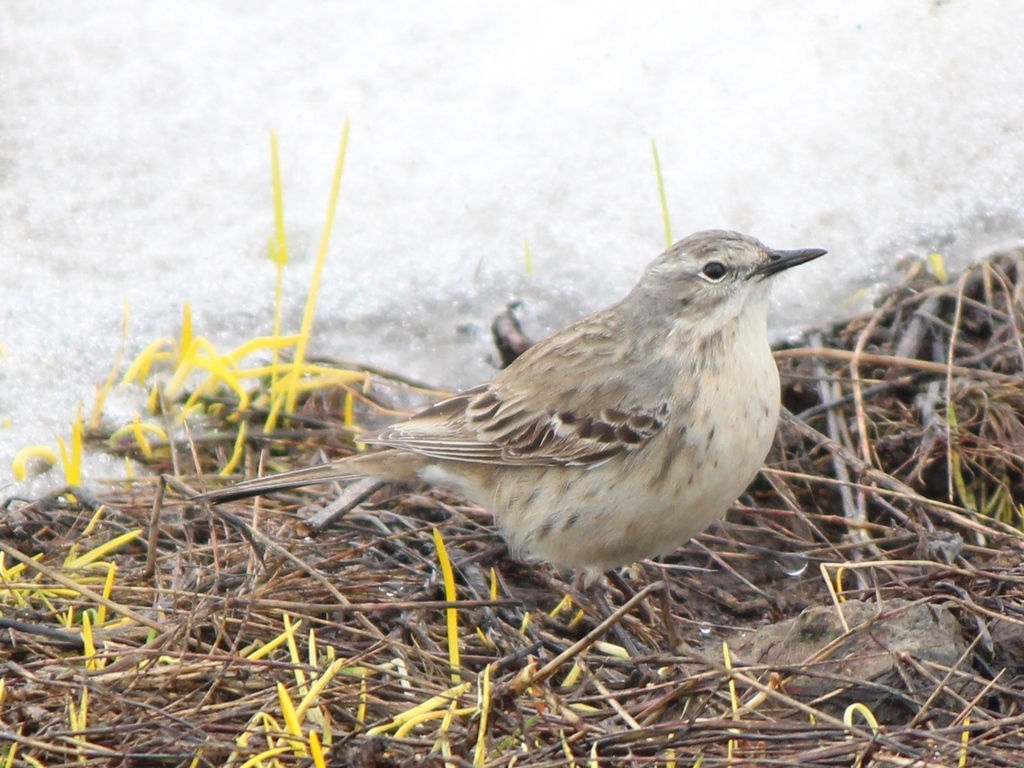
Water Pipit
Anthus spinoletta
Birdstrong against fish, reptiles
Common
Swoop
While active with another bird in play, it hits 6 harder on its first attack after entering play (12 with two others).
33

38
Water Pipit
Anthus spinoletta
Birdstrong against fish, reptiles
Common
While active with another bird in play, it hits 6 harder on its first attack after entering play (12 with two others).
Anthus spinoletta
Photo: © Ani Sarkisyan (original photo) · CC BY 4.0 (licence text) · cropped
Strong against: it deals 20% more damage to them. Weak against: these types deal 20% more damage to it.
The water pipit (Anthus spinoletta) is a small passerine bird which breeds in the mountains of Southern Europe and the Palearctic eastwards to China. It is a short-distance migrant; many birds move to lower altitudes or wet open lowlands in winter.
The water pipit in breeding plumage has greyish-brown upperparts, weakly streaked with darker brown, and pale pink-buff underparts fading to whitish on the lower belly. The head is grey with a broad white supercilium ("eyebrow"), and the outer tail feathers are white. In winter, the head is grey-brown, the supercilium is duller, the upperparts are more streaked, and the underparts are white, streaked lightly with brown on the breast and flanks. There are only minor differences among the three subspecies, the sexes are almost identical, and young birds resemble adults. The water pipit's song is delivered from a perch or in flight, and consists of four or five blocks, each consisting of about six repetitions of a different short note.
Water pipits construct a cup-like nest on the ground under vegetation or in cliff crevices and lay four to six speckled grey-ish white eggs, which hatch in about two weeks with a further 14–15 days to fledging. Although pipits occasionally catch insects in flight, they feed mainly on small invertebrates picked off the ground or vegetation, and also some plant material.
Abridged excerpt from the Wikipedia article Water pipit, by its authors, under the CC BY-SA 4.0 licence.
Least Concern on the IUCN Red List: that’s what makes this card Common.
Every Common card has 100 points, shared between HP, ATK and DEF:
How they’re shared out:

 DEF 38