 …
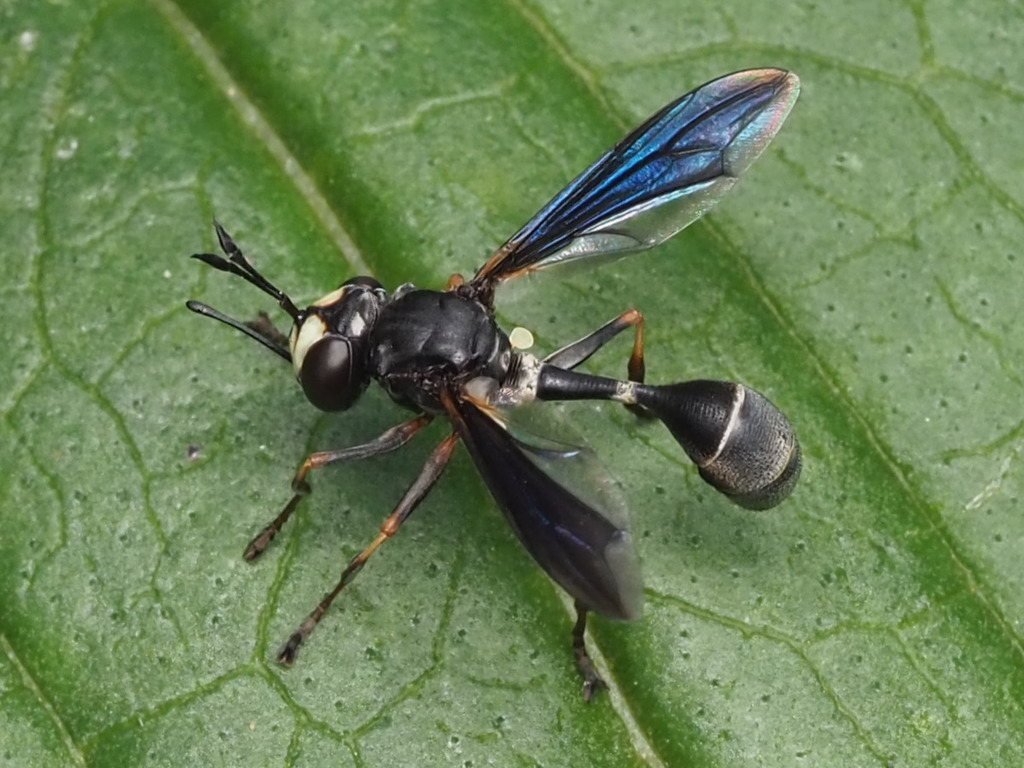
common eastern physocephala
Physocephala tibialis
Insectstrong against fungi, fish
Common
Swarm
While active with another insect in play, each of its attacks also hits the opposing bench for 10, without knocking them out (20 with two others).
40

39
common eastern physocephala
Physocephala tibialis
Insectstrong against fungi, fish
Common
While active with another insect in play, each of its attacks also hits the opposing bench for 10, without knocking them out (20 with two others).
Physocephala tibialis
Photo: Zygy (original photo) · CC0 (licence text) · cropped
Strong against: it deals 20% more damage to them. Weak against: these types deal 20% more damage to it.
Physocephala tibialis, the common eastern physocephala, is a species of thick-headed fly (family Conopidae) found throughout the eastern United States, often near flowering plants. The adult fly is primarily black with a yellow face and thin white stripes on the abdomen. It is commonly found along the east coast of the United States and is often found near flowering plants.
P. tibialis flies parasitize many different species of bees by laying their eggs inside the abdomen of their host. The larva hatches inside of the host and grows and develops until it takes up the majority of the host's abdomen. The host then dies and the larva envelopes itself in a puparium and pupates inside of the corpse. After an extended period of pupation, the adult emerges from the corpse of the host bee. When a bee becomes parasitized by a P. tibialis larva, certain behaviors such as induced grave digging and changes in flower preference often occur.
Excerpt from the Wikipedia article Physocephala tibialis, by its authors, under the CC BY-SA 4.0 licence.
No global status on the IUCN Red List: that’s what makes this card Common.
Every Common card has 100 points, shared between HP, ATK and DEF:
How they’re shared out:

 DEF 39