 …
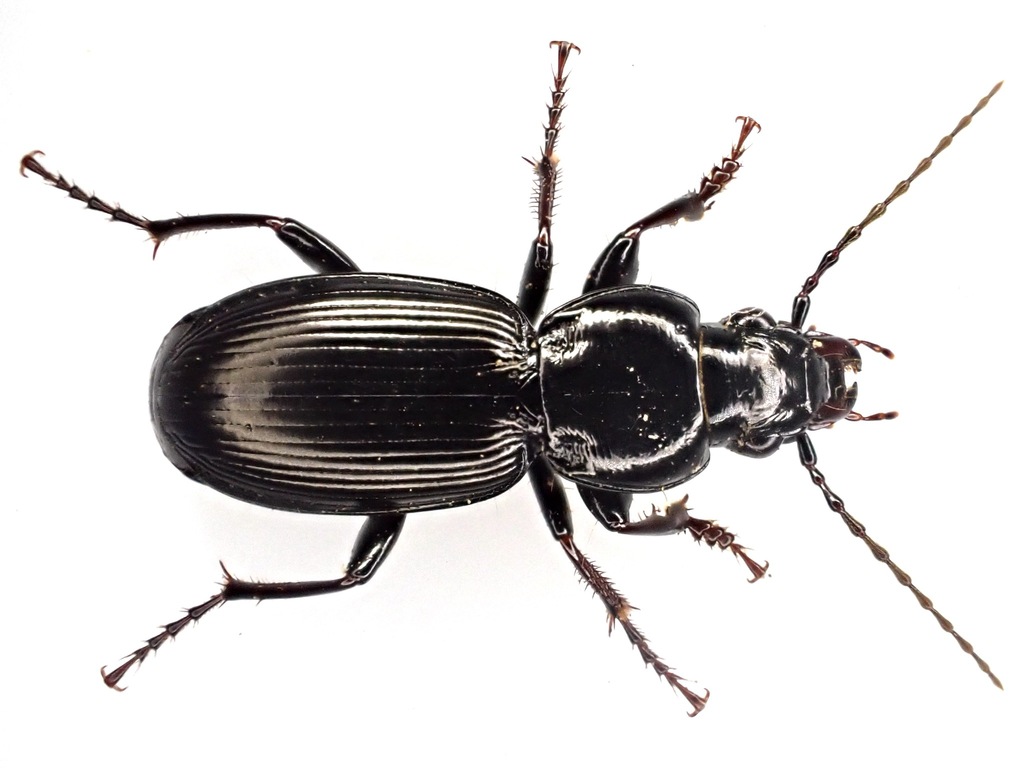
Black Clock
Pterostichus madidus
Insectstrong against fungi, fish
Common
Swarm
While active with another insect in play, each of its attacks also hits the opposing bench for 10, without knocking them out (20 with two others).
31

39
Black Clock
Pterostichus madidus
Insectstrong against fungi, fish
Common
While active with another insect in play, each of its attacks also hits the opposing bench for 10, without knocking them out (20 with two others).
Pterostichus madidus
Photo: © Joss Carr (original photo) · CC BY 4.0 (licence text) · cropped
Strong against: it deals 20% more damage to them. Weak against: these types deal 20% more damage to it.
Pterostichus madidus, commonly known as the black clock beetle, is a species of ground beetle native to Europe. The black clock beetle typically grows between 14–20mm in length, and is black in colouration, with legs that are usually red, reddish brown, or black. It can be found most abundantly in summer, and breeds during the autumn. It is commonly found in gardens, grasslands, and dry woodland, under stones, in grass, or in loose bark.
In the United Kingdom, this beetle is commonly known as the rain beetle as they tend to appear when rain is imminent. There is an old superstition that should you step on one or kill one, it will cause it to rain.
Excerpt from the Wikipedia article Pterostichus madidus, by its authors, under the CC BY-SA 4.0 licence.
No global status on the IUCN Red List: that’s what makes this card Common.
Every Common card has 100 points, shared between HP, ATK and DEF:
How they’re shared out:

 DEF 39