 …
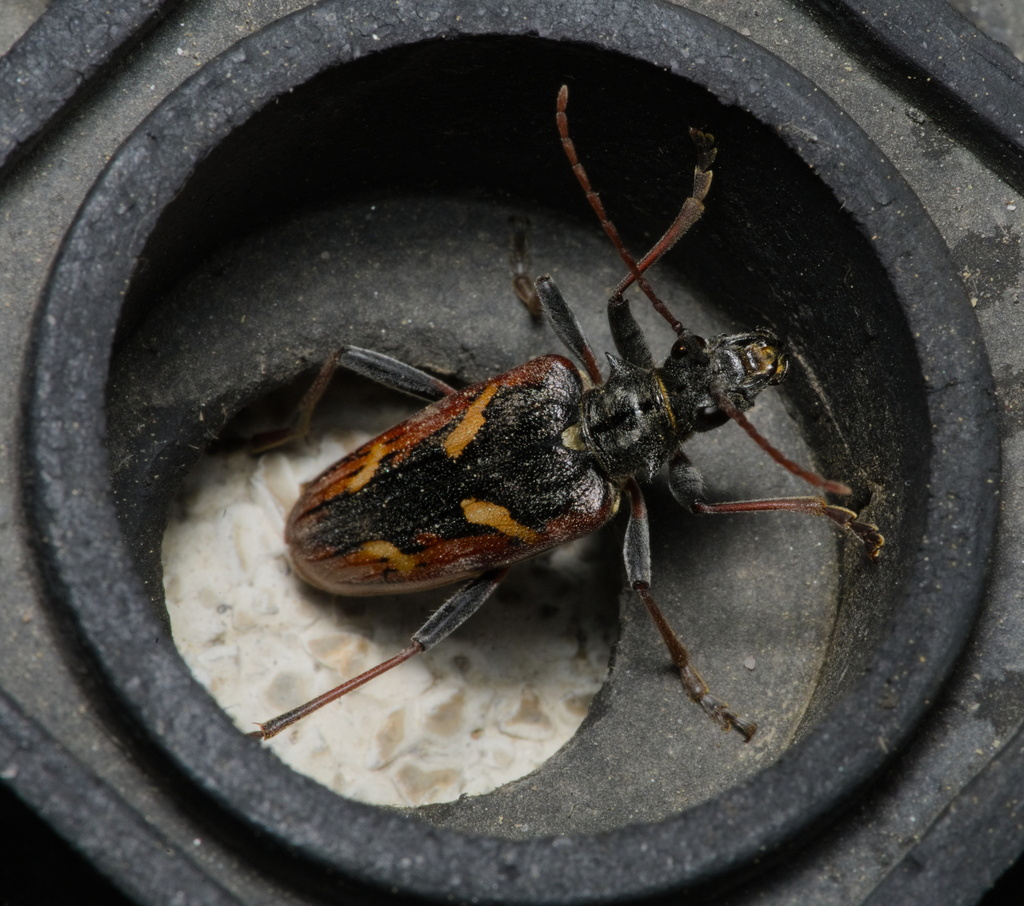
Two-banded Longhorn Beetle
Rhagium bifasciatum
Insectstrong against fungi, fish
Common
Swarm
While active with another insect in play, each of its attacks also hits the opposing bench for 10, without knocking them out (20 with two others).
40

36
Two-banded Longhorn Beetle
Rhagium bifasciatum
Insectstrong against fungi, fish
Common
While active with another insect in play, each of its attacks also hits the opposing bench for 10, without knocking them out (20 with two others).
Rhagium bifasciatum
Photo: iNaturalist (original photo) · CC0 (licence text) · cropped
Strong against: it deals 20% more damage to them. Weak against: these types deal 20% more damage to it.
Rhagium bifasciatum, sometimes called the two-banded longhorn beetle, is one of the most common longhorn beetles in Europe, Turkey and the Caucasus, although it is absent from the far north-east of Europe and some offshore islands, such as Malta. It may reach 22 millimetres (0.87 in) long and can be distinguished by the two prominent pale yellow bands on each of the elytra, although up to seventeen different patterns have been recognised.
Like other longhorn beetles, R. bifasciatum lays its eggs in dead wood, mostly of coniferous trees, where they bore deep, broad tunnels until they are ready to pupate after about two years. The adults feed on a wide variety of coniferous and broad-leaved trees.
Excerpt from the Wikipedia article Rhagium bifasciatum, by its authors, under the CC BY-SA 4.0 licence.
No global status on the IUCN Red List: that’s what makes this card Common.
Every Common card has 100 points, shared between HP, ATK and DEF:
How they’re shared out:

 DEF 36