 …
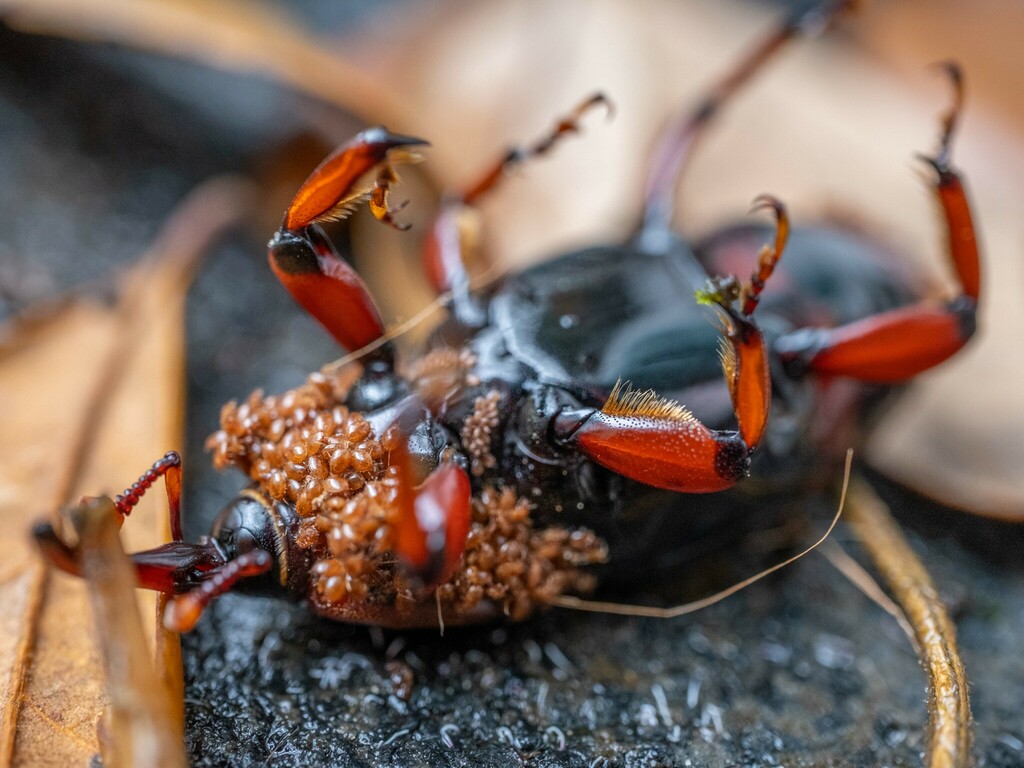
Palmetto Weevil
Rhynchophorus cruentatus
Insectstrong against fungi, fish
Common
Swarm
While active with another insect in play, each of its attacks also hits the opposing bench for 10, without knocking them out (20 with two others).
29

39
Palmetto Weevil
Rhynchophorus cruentatus
Insectstrong against fungi, fish
Common
While active with another insect in play, each of its attacks also hits the opposing bench for 10, without knocking them out (20 with two others).
Rhynchophorus cruentatus
Photo: © Alex Abair (original photo) · CC BY 4.0 (licence text) · cropped
Strong against: it deals 20% more damage to them. Weak against: these types deal 20% more damage to it.
The palmetto weevil (Rhynchophorus cruentatus) is an insect native to Florida, but has been found as far as southern Texas to the west and South Carolina to the north. It is the largest weevil in North America and the only kind of palm weevil in the continental United States. It infests palms and is considered a pest. Its main target is the Canary Island date palm, but date palms (a different species than the Canary Island date palm), sabal palms (the palmetto weevil's traditional target), saw palmetto (the palmetto weevil's traditional alternative target), Washingtonia, Pritchardia, royal palms, Latania, coconut palms, Caryota, and Bismarckia are also susceptible. Distressed palm trees are usually attacked, which makes transplanted trees a frequent target. The Palmetto Weevils mate at the base of the palm branches where the females deposit their eggs. The grubs then eat into the palm tree, killing it. After the larvae have turned into adult weevils, the damage can be seen, but by then, it is considered to be too late for the tree. The life cycle from egg to adult for a palmetto weevil is about 84 days. For prevention, it is recommended an appropriate insecticidal crown drench is done twice a year for high value palms.
Grubs of other species of palm weevils are considered a delicacy in countries outside the United States.
Palmetto weevil are most active in late spring and early summer.
Excerpt from the Wikipedia article Rhynchophorus cruentatus, by its authors, under the CC BY-SA 4.0 licence.
No global status on the IUCN Red List: that’s what makes this card Common.
Every Common card has 100 points, shared between HP, ATK and DEF:
How they’re shared out:

 DEF 39