 …
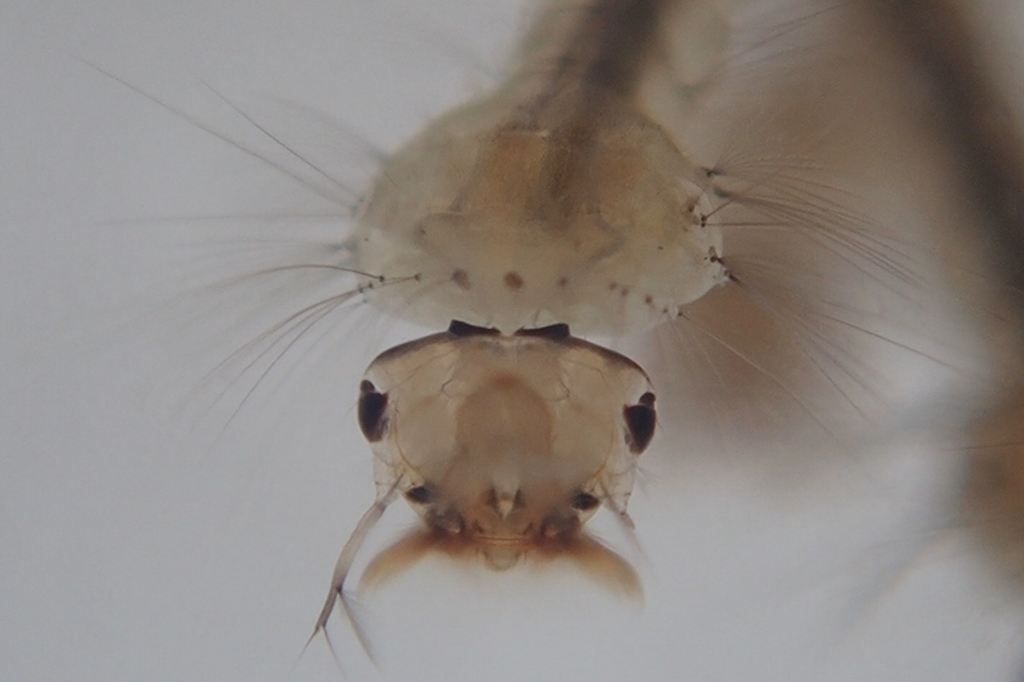
Common house mosquito
Culex pipiens
Insectstrong against fungi, fish
Common
Swarm
While active with another insect in play, each of its attacks also hits the opposing bench for 10, without knocking them out (20 with two others).
31

39
Common house mosquito
Culex pipiens
Insectstrong against fungi, fish
Common
While active with another insect in play, each of its attacks also hits the opposing bench for 10, without knocking them out (20 with two others).
Culex pipiens
Photo: © Radu Teodoreanu (original photo) · CC BY 4.0 (licence text) · cropped
Strong against: it deals 20% more damage to them. Weak against: these types deal 20% more damage to it.
Culex pipiens is a species of mosquito commonly referred to as the common house mosquito or northern house mosquito. Native to Africa, Asia and Europe, it is now widely distributed in temperate regions on every continent except Antarctica and is one of the most common mosquitoes found in human habitats in temperate parts of the northern hemisphere. A major vector of some viruses, it can be abundant in cities, especially those with poor wastewater management. It is the most common mosquito to the northern regions of the US. Culex pipiens is the type species for the genus Culex.
Culex pipiens includes two morphologically indistinguishable forms, Culex pipiens form pipiens and Culex pipiens form molestus. Despite their morphological similarity, the two forms exhibit striking ecological and behavioral differences. Form pipiens lives above ground and primarily feeds on birds. Form molestus, also known as the London Underground mosquito, can live under ground and frequently bites mammals including humans. The two forms are largely genetically isolated in Europe, but have been reported to hybridize in the United States. Importantly, hybrids appear to have intermediate feeding behavior, biting both humans and birds, and are implicated as a bridge vector in the maintenance and transmission of the West Nile virus from birds to humans.
Abridged excerpt from the Wikipedia article Culex pipiens, by its authors, under the CC BY-SA 4.0 licence.
No global status on the IUCN Red List: that’s what makes this card Common.
Every Common card has 100 points, shared between HP, ATK and DEF:
How they’re shared out:

 DEF 39