 …
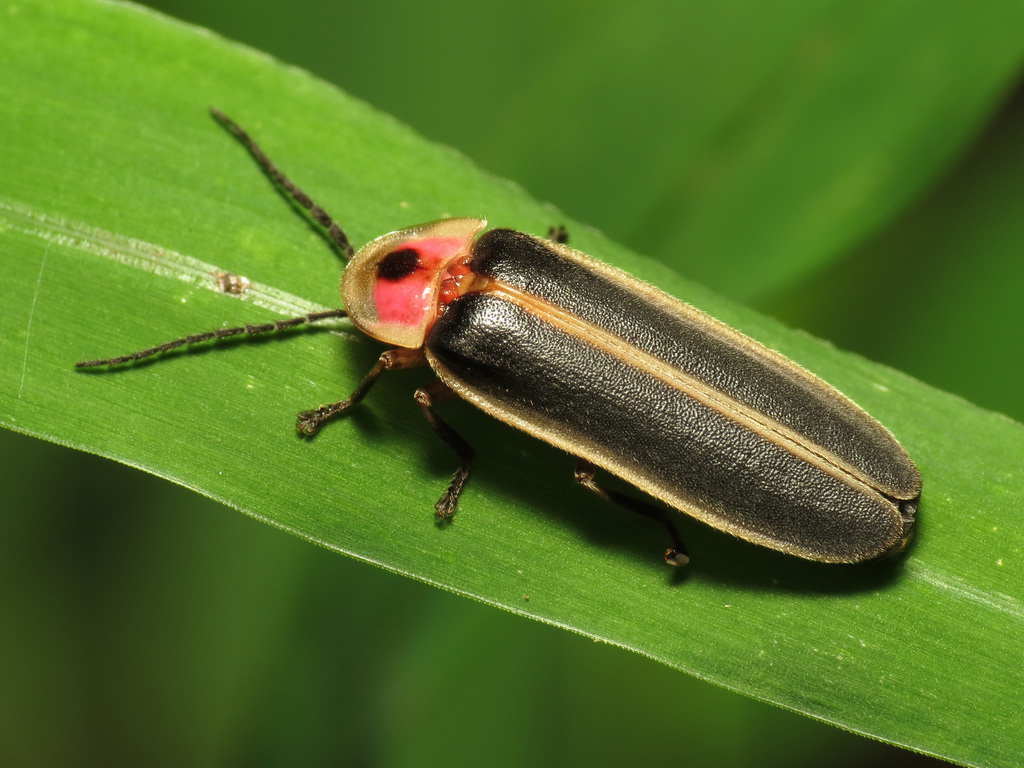
Common Eastern Firefly
Photinus pyralis
Insectstrong against fungi, fish
Common
Swarm
While active with another insect in play, each of its attacks also hits the opposing bench for 10, without knocking them out (20 with two others).
33

38
Common Eastern Firefly
Photinus pyralis
Insectstrong against fungi, fish
Common
While active with another insect in play, each of its attacks also hits the opposing bench for 10, without knocking them out (20 with two others).
Photinus pyralis
Photo: © Katja Schulz (original photo) · CC BY 4.0 (licence text) · cropped
Strong against: it deals 20% more damage to them. Weak against: these types deal 20% more damage to it.
Photinus pyralis, also known by the common names the common eastern firefly or big dipper firefly, and sometimes called a "lightning bug", is a species of flying beetle. An organ on its abdomen is responsible for its light production. It is the most common species of firefly in North America and is typically found east of the Rocky Mountains. Photinus fireflies are often confused with fireflies of the similar-sounding genus, Photuris, which are also found in North America.
These fireflies are most noticeable around twilight in the spring and summer months. The common name, big dipper firefly, is due to the characteristic flight of the males, whose trajectory appears to follow a J-shape, lighting on the upswing. During flight, this J-pattern is used alongside light flashing to attract females, who rest on vegetation and signal back to males if interested. The firefly flashes are stimulated by light-activated proteins, not rhythmic impulses as originally thought.
Excerpt from the Wikipedia article Photinus pyralis, by its authors, under the CC BY-SA 4.0 licence.
Least Concern on the IUCN Red List: that’s what makes this card Common.
Every Common card has 100 points, shared between HP, ATK and DEF:
How they’re shared out:

 DEF 38