 …
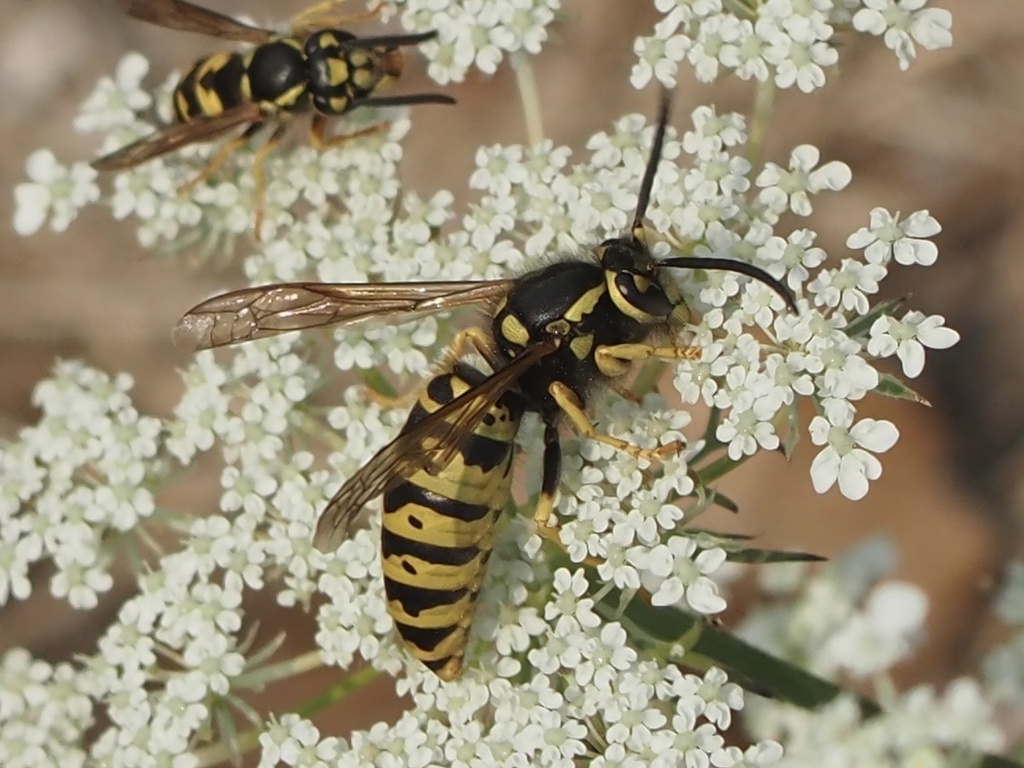
Prairie Yellowjacket
Vespula atropilosa
Insectstrong against fungi, fish
Common
Swarm
While active with another insect in play, each of its attacks also hits the opposing bench for 10, without knocking them out (20 with two others).
40

38
Prairie Yellowjacket
Vespula atropilosa
Insectstrong against fungi, fish
Common
While active with another insect in play, each of its attacks also hits the opposing bench for 10, without knocking them out (20 with two others).
Vespula atropilosa
Photo: © Peter Abrahamsen (original photo) · CC BY 4.0 (licence text) · cropped
Strong against: it deals 20% more damage to them. Weak against: these types deal 20% more damage to it.
Vespula atropilosa, also known as the prairie yellowjacket, is a black and yellow social wasp that forms annual colonies. Vespula atropilosa was formerly a member of the Vespa family. Males have either xanthic (yellow) or melanic (black) abdominal coloring. The prairie yellowjacket can be found in the Western and Midwestern United States as well as parts of southern Canada. It builds its nests underground and prefers large open areas such as pastures and golf courses. Vespula atropilosa colonies are founded by a queen in the spring and grow most during mid-summer. It preys on other insects such as flies and grasshoppers but is not a scavenger like other wasps. Queens mate with multiple males, and males will fight each other for matings. V. atropilosa is a social wasp that practices altruism. Prairie yellowjackets are not considered pests but are commonly found in backyards in the Pacific Northwest. This species derives its common name from the prairies and grasslands where it can be found.
Excerpt from the Wikipedia article Vespula atropilosa, by its authors, under the CC BY-SA 4.0 licence.
No global status on the IUCN Red List: that’s what makes this card Common.
Every Common card has 100 points, shared between HP, ATK and DEF:
How they’re shared out:

 DEF 38