 …
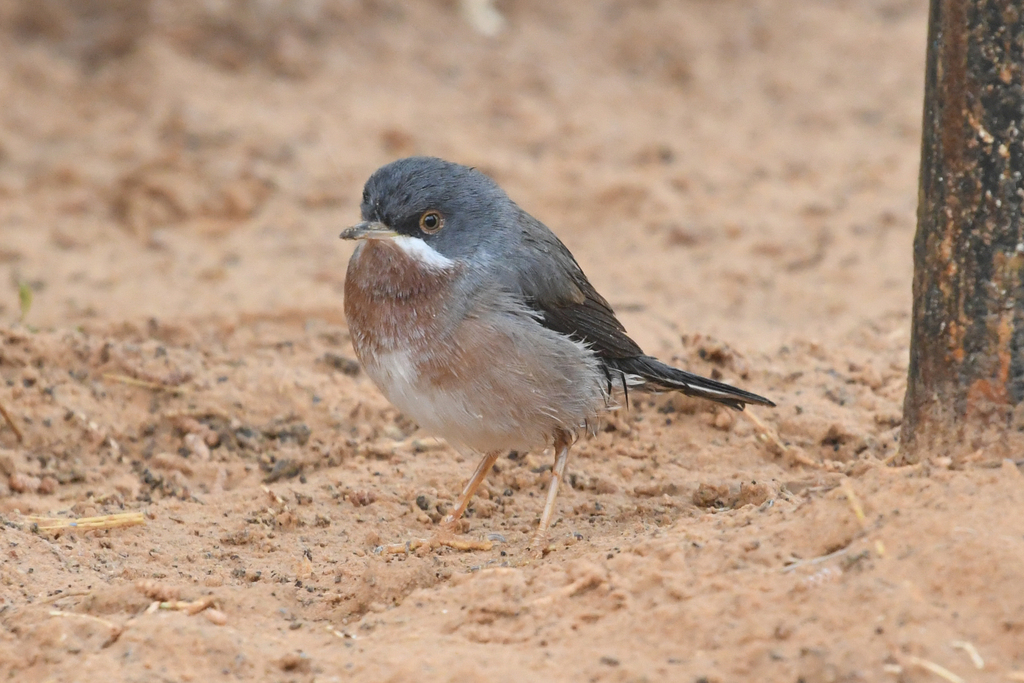
Eastern Subalpine Warbler
Curruca cantillans
Birdstrong against fish, reptiles
Common
Swoop
While active with another bird in play, it hits 6 harder on its first attack after entering play (12 with two others).
39

42
Eastern Subalpine Warbler
Curruca cantillans
Birdstrong against fish, reptiles
Common
While active with another bird in play, it hits 6 harder on its first attack after entering play (12 with two others).
Curruca cantillans
Photo: © Julien Renoult (original photo) · CC BY 4.0 (licence text) · cropped
Strong against: it deals 20% more damage to them. Weak against: these types deal 20% more damage to it.
The eastern subalpine warbler (Curruca cantillans) is a small Sylviidae warbler which breeds in the southernmost areas of Europe. It was first described by the German naturalist Peter Simon Pallas in 1764 and given the binomial name Motacilla cantillans. The specific cantillans is Latin for "warbling" from canere, "to sing".
Like most Curruca species, it has distinct male and female plumages. The adult male has a grey back and head, brick-red underparts, and white malar streaks ("moustaches"). The female is mainly brown above, with a greyer head, and whitish below with a pink flush. The subalpine warbler's song is fast and rattling, and is similar to the lesser whitethroat.
This bird seems to be related to the Sardinian warbler-Menetries' warbler superspecies. They all have white malar areas, the heads being dark above in adult males, and naked eye-rings. These three species are related to a superspecies consisting of Rüppell's warbler and the Cyprus warbler, which also share the white malar area with blackish above (Shirihai et al. 2001, Jønsson & Fjeldså 2006 ).
Abridged excerpt from the Wikipedia article Eastern subalpine warbler, by its authors, under the CC BY-SA 4.0 licence.
Least Concern on the IUCN Red List: that’s what makes this card Common.
Every Common card has 100 points, shared between HP, ATK and DEF:
How they’re shared out:

 DEF 42