 …
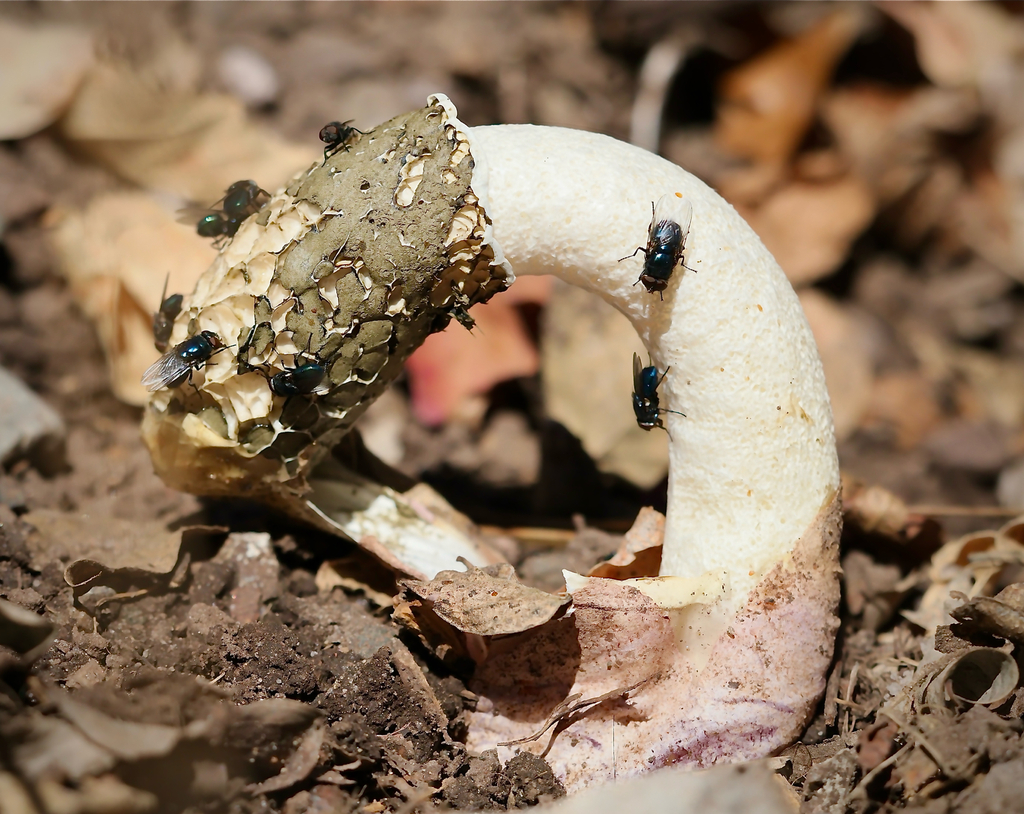
dune stinkhorn
Phallus hadriani
Fungusstrong against amphibians, reptiles
Common
Mycelium
While active with another fungus in play, it regains 5 HP at the start of your turn (8 with two others).
40

28
dune stinkhorn
Phallus hadriani
Fungusstrong against amphibians, reptiles
Common
While active with another fungus in play, it regains 5 HP at the start of your turn (8 with two others).
Phallus hadriani
Photo: © Ken D. (original photo) · CC BY 4.0 (licence text) · cropped
Strong against: it deals 20% more damage to them. Weak against: these types deal 20% more damage to it.
Phallus hadriani, commonly known as the dune stinkhorn, Hadrian's stinkhorn or the sand stinkhorn, is a species of fungus in the Phallaceae (stinkhorn) family. The stalk of the fruit body reaches up to 20 cm (8 in) tall by 4 cm (1+1⁄2 in) thick, and is spongy, fragile, and hollow. At the top of the stem is a ridged and pitted, thimble-like cap over which is spread olive-colored spore slime (gleba). Shortly after emerging, the gleba liquefies and releases a fetid odor that attracts insects, which help disperse the spores. P. hadriani may be distinguished from the similar P. impudicus (the common stinkhorn) by the presence of a pink or violet-colored volva at the base of the stem, and by differences in odor.
It is a widely distributed species, and is native to Eurasia and North America. In Australia, it is probably an introduced species. It typically grows in public lawns, yards and gardens, usually in sandy soils. It is said to be edible in its immature egg-like stage.
Excerpt from the Wikipedia article Phallus hadriani, by its authors, under the CC BY-SA 4.0 licence.
No global status on the IUCN Red List: that’s what makes this card Common.
Every Common card has 100 points, shared between HP, ATK and DEF:
How they’re shared out:

 DEF 28