 …
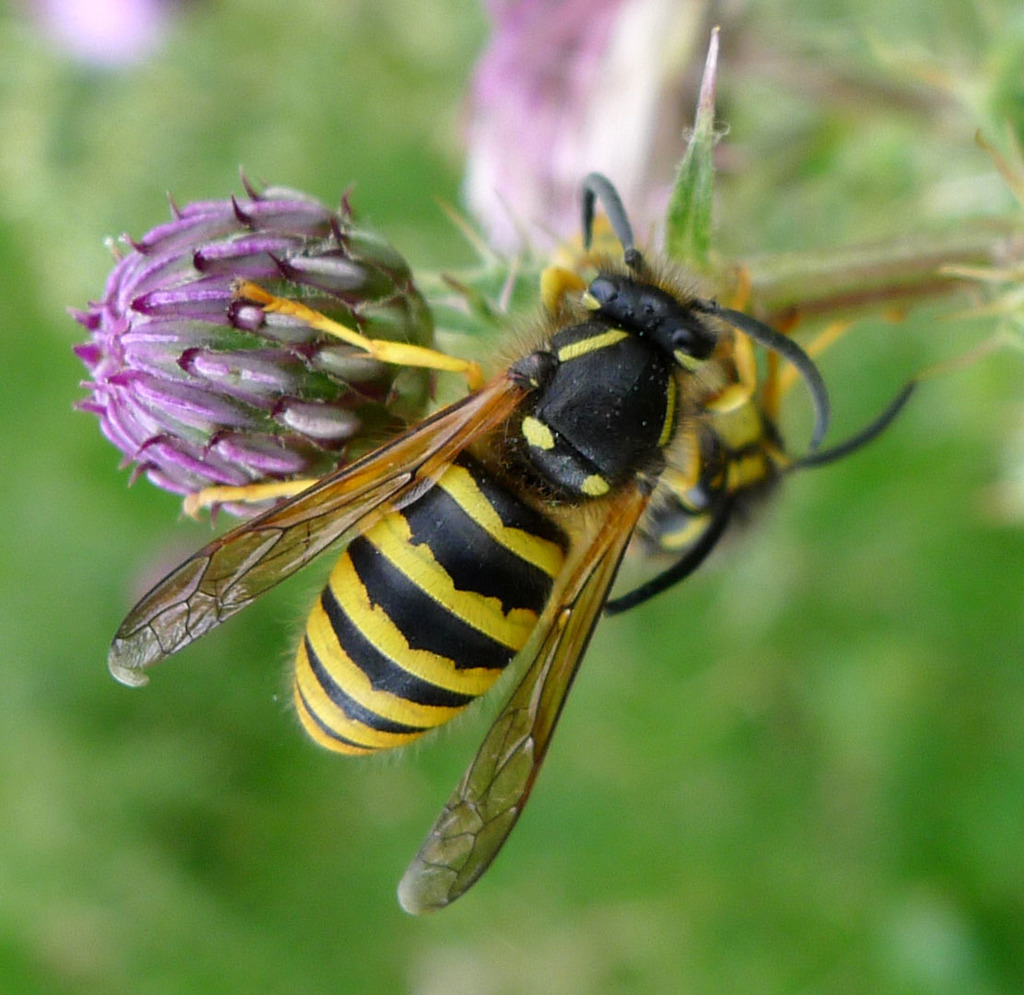
Tree Wasp
Dolichovespula sylvestris
Insectstrong against fungi, fish
Common
Swarm
While active with another insect in play, each of its attacks also hits the opposing bench for 10, without knocking them out (20 with two others).
30

38
Tree Wasp
Dolichovespula sylvestris
Insectstrong against fungi, fish
Common
While active with another insect in play, each of its attacks also hits the opposing bench for 10, without knocking them out (20 with two others).
Dolichovespula sylvestris
Photo: © gailhampshire (original photo) · CC BY 4.0 (licence text) · cropped
Strong against: it deals 20% more damage to them. Weak against: these types deal 20% more damage to it.
The tree wasp (Dolichovespula sylvestris) is a species of eusocial wasp in the family Vespidae, found in the temperate regions of Eurasia, particularly in western Europe. Despite being called the tree wasp, it builds both aerial and underground paper nests, and can be found in rural and urban habitats. D. sylvestris is a medium-sized wasp that has yellow and black stripes and a black dot in the center of its clypeus. It is most common to see this wasp between May and September during its 3.5 month colony cycle.
Tree wasps carry out worker policing and have a haplodiploid sex-determination system; this results in a high level of relatedness within the colony. The workers will take over all of the foraging from the queen once the first workers reach adulthood. Worker wasps typically forage for other insects, the nectar of plants, and wood to digest for nest construction. The tree wasp is sometimes a victim of the nest parasite Dolichovespula omissa, who lays its eggs in the nest of D. sylvestris, as well as individual parasites including roundworms.
Excerpt from the Wikipedia article Dolichovespula sylvestris, by its authors, under the CC BY-SA 4.0 licence.
No global status on the IUCN Red List: that’s what makes this card Common.
Every Common card has 100 points, shared between HP, ATK and DEF:
How they’re shared out:

 DEF 38