 …
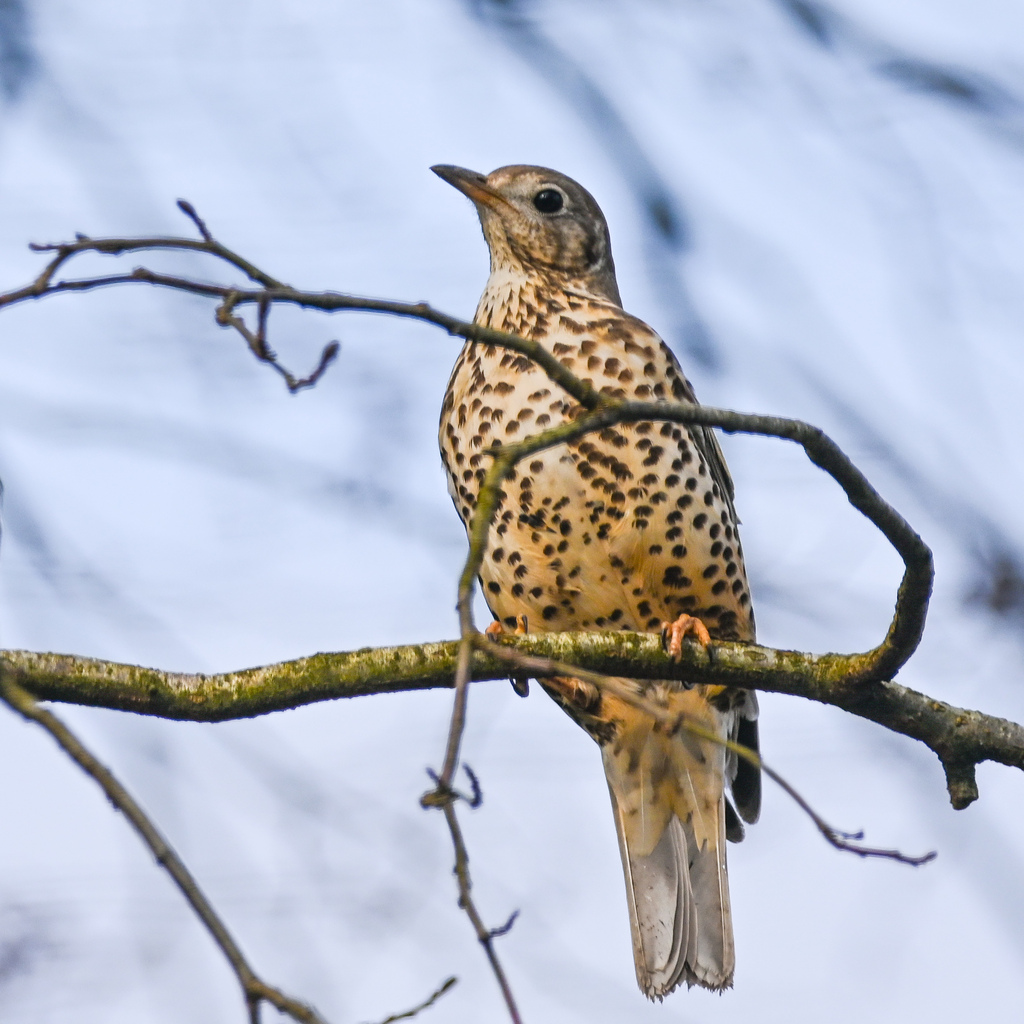
Mistle Thrush
Turdus viscivorus
Birdstrong against fish, reptiles
Common
Swoop
While active with another bird in play, it hits 6 harder on its first attack after entering play (12 with two others).
34

35
Mistle Thrush
Turdus viscivorus
Birdstrong against fish, reptiles
Common
While active with another bird in play, it hits 6 harder on its first attack after entering play (12 with two others).
Turdus viscivorus
Photo: © Frank Sengpiel (original photo) · CC BY 4.0 (licence text) · cropped
Strong against: it deals 20% more damage to them. Weak against: these types deal 20% more damage to it.
The mistle thrush (Turdus viscivorus) is a bird common to much of Europe, temperate Asia and North Africa. It is a year-round resident in a large part of its range, but northern and eastern populations migrate south for the winter, often in small flocks. It is a large thrush with pale grey-brown upper parts, a greyish-white chin and throat, and black spots on its pale yellow and off-white under parts. The sexes are similar in plumage, and its three subspecies show only minimal differences. The male has a loud, far-carrying song which is delivered even in wet and windy weather, earning the bird the old name of stormcock. Historically, the name was also sometimes spelled "missel thrush".
Found in open woods, parks, hedges and cultivated land, the mistle thrush feeds on a wide variety of invertebrates, seeds and berries. Its preferred fruit include those of mistletoe, holly, rowan, and yew. Mistletoe is favoured where it is available, and this is reflected in the thrush's English and scientific names; the plant, a parasitic species, benefits from its seeds being excreted by the thrush onto branches where they can germinate. In winter, a mistle thrush will vigorously defend mistletoe clumps or other fruit-bearing trees as a food reserve for when times are hard, chasing off other thrushes and other fruit-eating birds like waxwings.
Abridged excerpt from the Wikipedia article Mistle thrush, by its authors, under the CC BY-SA 4.0 licence.
Least Concern on the IUCN Red List: that’s what makes this card Common.
Every Common card has 100 points, shared between HP, ATK and DEF:
How they’re shared out:

 DEF 35