 …
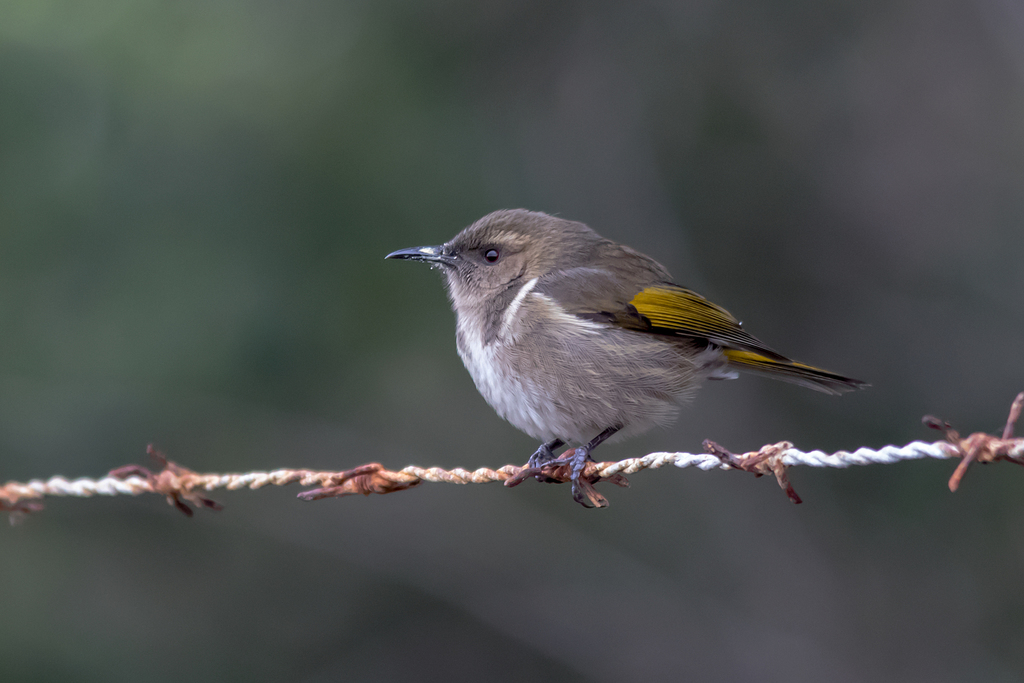
Crescent Honeyeater
Phylidonyris pyrrhopterus
Birdstrong against fish, reptiles
Common
Swoop
While active with another bird in play, it hits 6 harder on its first attack after entering play (12 with two others).
31

39
Crescent Honeyeater
Phylidonyris pyrrhopterus
Birdstrong against fish, reptiles
Common
While active with another bird in play, it hits 6 harder on its first attack after entering play (12 with two others).
Phylidonyris pyrrhopterus
Photo: © Andrew Allen (original photo) · CC BY 4.0 (licence text) · cropped
Strong against: it deals 20% more damage to them. Weak against: these types deal 20% more damage to it.
The crescent honeyeater (Phylidonyris pyrrhopterus) is a passerine bird of the honeyeater family Meliphagidae native to southeastern Australia. A member of the genus Phylidonyris, it is most closely related to the common New Holland honeyeater (P. novaehollandiae) and the white-cheeked honeyeater (P. niger). Two subspecies are recognized, with P. p. halmaturinus restricted in range to Kangaroo Island and the Mount Lofty Ranges in South Australia.
It has dark grey plumage and paler underparts, highlighted by yellow wing-patches and a broad, black crescent, outlined in white, down the sides of its breast. The species exhibits slight sexual dimorphism, with the female being duller in colour than the male. Juvenile birds are similar to the female, though the yellow wing-patches of male nestlings can be easily distinguished.
The male has a complex and variable song, which is heard throughout the year. It sings from an exposed perch, and during the breeding season performs song flights. The crescent honeyeater is found in areas of dense vegetation including sclerophyll forest and alpine habitats, as well as heathland, and parks and gardens, where its diet is made up of nectar and invertebrates. It forms long-term pairs, and often stays committed to one breeding site for several years. The female builds the nest and does most of the caring for the two to three young, which become independent within 40 days of laying its egg.
Abridged excerpt from the Wikipedia article Crescent honeyeater, by its authors, under the CC BY-SA 4.0 licence.
Least Concern on the IUCN Red List: that’s what makes this card Common.
Every Common card has 100 points, shared between HP, ATK and DEF:
How they’re shared out:

 DEF 39