 …
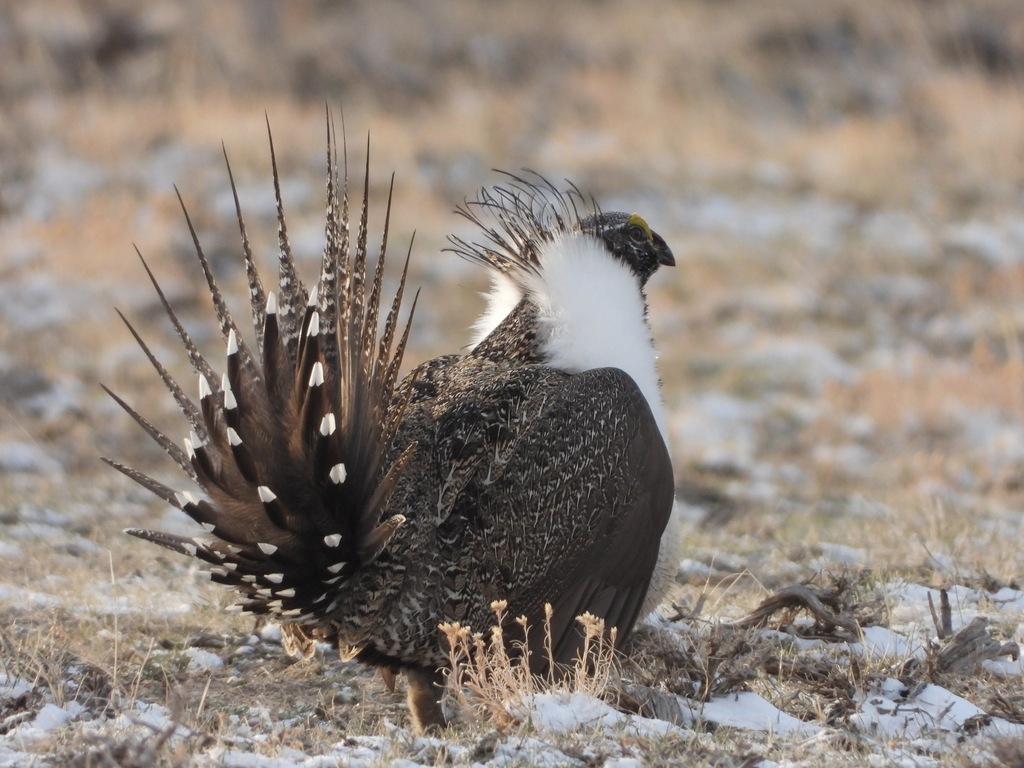
Greater Sage-Grouse
Centrocercus urophasianus
Birdstrong against fish, reptiles
Rare
Swoop
While active with another bird in play, it hits 6 harder on its first attack after entering play (12 with two others).
54

43
Greater Sage-Grouse
Centrocercus urophasianus
Birdstrong against fish, reptiles
Rare
While active with another bird in play, it hits 6 harder on its first attack after entering play (12 with two others).
Centrocercus urophasianus
Photo: © Jared Shorma (original photo) · CC BY 4.0 (licence text) · cropped
Strong against: it deals 20% more damage to them. Weak against: these types deal 20% more damage to it.
The greater sage-grouse (Centrocercus urophasianus), also known as the sagehen, is the largest grouse in North America. Its range is sagebrush country in the western United States and southern Alberta and Saskatchewan, Canada. It was known as simply the sage grouse until the Gunnison sage-grouse was recognized as a separate species in 2000. The Mono Basin population of sage grouse may also be distinct.
The greater sage-grouse is a permanent resident in its breeding grounds but may move short distances to lower elevations during winter. It makes use of a complex lek system in mating and nests on the ground under sagebrush or grass patches. It forages on the ground, mainly eating sagebrush but also other plants and insects. Greater sage-grouse do not have a muscular crop and are not able to digest hard seeds like other grouse.
The species is in decline across its range due to habitat loss, and has been recognized as threatened or near threatened by several national and international organizations.
Excerpt from the Wikipedia article Greater sage-grouse, by its authors, under the CC BY-SA 4.0 licence.
Vulnerable on the IUCN Red List: that’s what makes this card Rare.
Every Rare card has 130 points, shared between HP, ATK and DEF:
How they’re shared out:

 DEF 43