 …
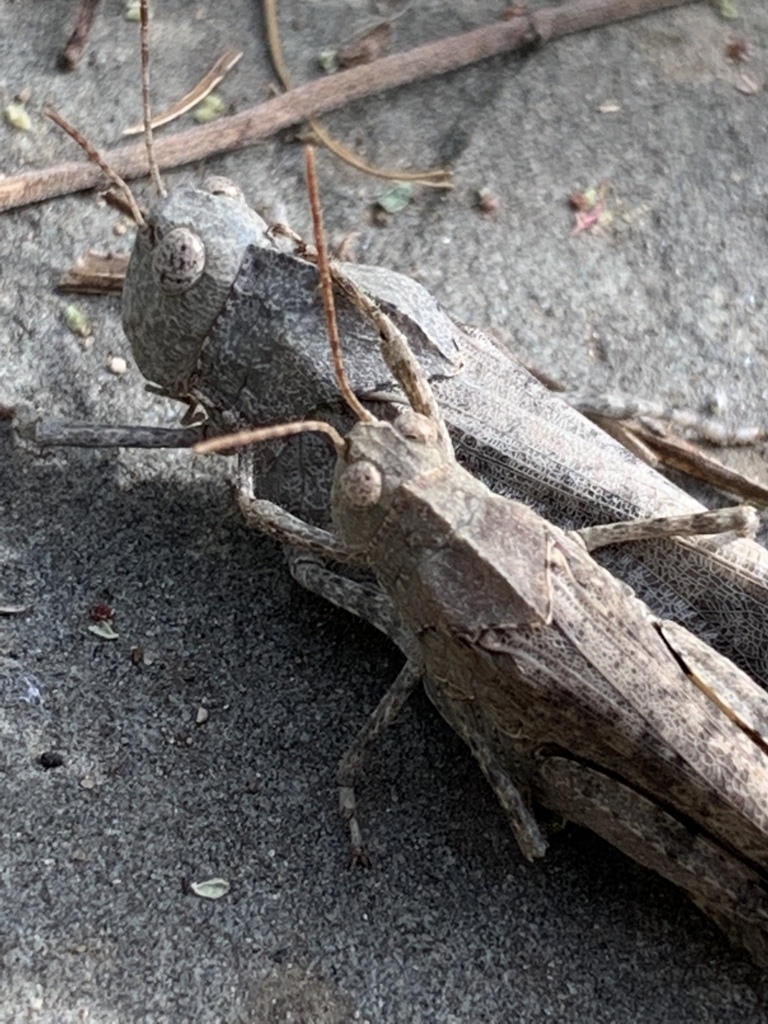
Carolina Grasshopper
Dissosteira carolina
Insectstrong against fungi, fish
Common
Swarm
While active with another insect in play, each of its attacks also hits the opposing bench for 10, without knocking them out (20 with two others).
43

34
Carolina Grasshopper
Dissosteira carolina
Insectstrong against fungi, fish
Common
While active with another insect in play, each of its attacks also hits the opposing bench for 10, without knocking them out (20 with two others).
Dissosteira carolina
Photo: © Healthy Yards (original photo) · CC BY 4.0 (licence text) · cropped
Strong against: it deals 20% more damage to them. Weak against: these types deal 20% more damage to it.
Dissosteira carolina, the Carolina grasshopper, Carolina locust, black-winged grasshopper, road-duster or quaker, is a band-winged species of grasshopper which ranges widely in North America inhabiting weedy grasslands.
The Carolina Locust is a short-horned grasshopper (Family Acrididae) found in most of the United States and other parts of North America (Fig 1). These grasshoppers can be anywhere between 32 and 58 mm, with females being larger than males. Their color can range from grey to brown with contrasting black and yellow-white hind wings.
Carolina Locusts are often found on or around dirt roads or paths, where they can easily blend in to gravel and soil. They prefer dry, sunny, open areas for basking, courting displays, and egg laying. Their courtship displays include flying and hovering above the open ground. These males can also call, but their sound is soft and quiet. Their flight is commonly confused for the flight of butterflies.
This species is not known to be a major pest, but some outbreaks have caused some damage in the early 20th century.
Excerpt from the Wikipedia article Dissosteira carolina, by its authors, under the CC BY-SA 4.0 licence.
No global status on the IUCN Red List: that’s what makes this card Common.
Every Common card has 100 points, shared between HP, ATK and DEF:
How they’re shared out:

 DEF 34