 …
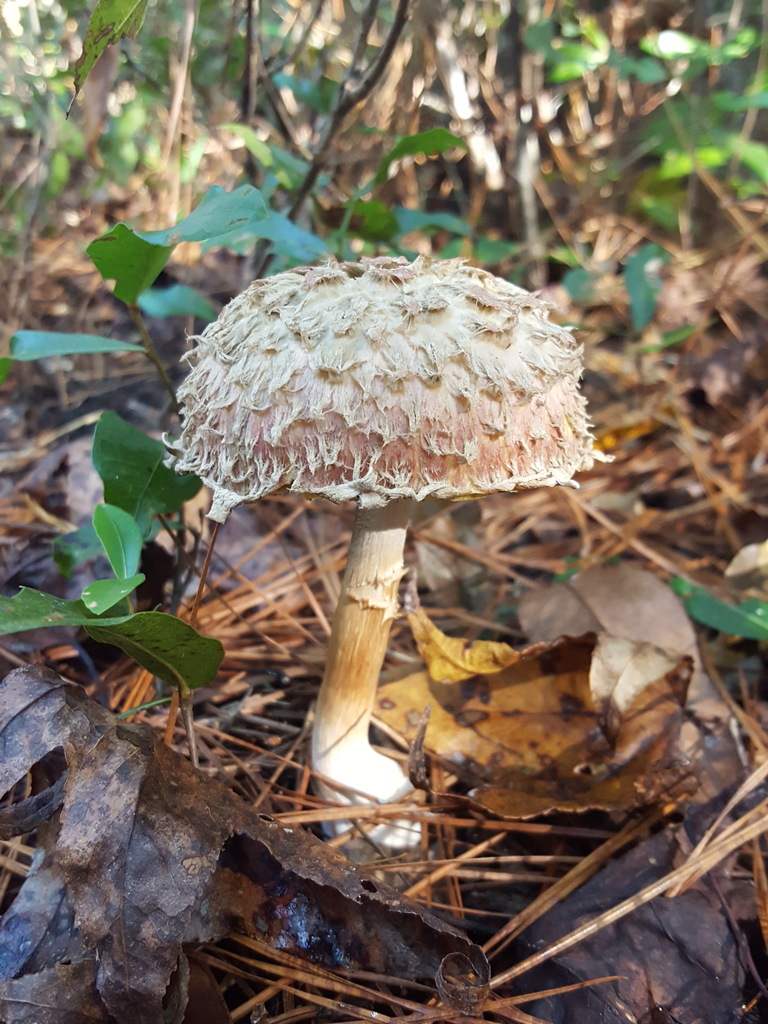
Pineapple Bolete
Boletellus ananas
Fungusstrong against amphibians, reptiles
Common
Mycelium
While active with another fungus in play, it regains 5 HP at the start of your turn (8 with two others).
39

29
Pineapple Bolete
Boletellus ananas
Fungusstrong against amphibians, reptiles
Common
While active with another fungus in play, it regains 5 HP at the start of your turn (8 with two others).
Boletellus ananas
Photo: © Alex Abair (original photo) · CC BY 4.0 (licence text) · cropped
Strong against: it deals 20% more damage to them. Weak against: these types deal 20% more damage to it.
Boletellus ananas, commonly known as the pineapple bolete, is a mushroom in the family Boletaceae, and the type species of the genus Boletellus. Previously known as Boletus ananas and Boletus coccinea (among other synonyms), the species was given its current name by William Alphonso Murrill in 1909.
The fruit body is characterized by the reddish-pink (or pinkish-tan to yellowish if an older specimen) scales on the cap that are often found hanging from the edge. The pore surface on the underside of the cap is made of irregular or angular pores up to 2 mm wide that bruise a blue color. It is yellow when young but ages to a deep olive-brown color. Microscopically, B. ananas is distinguished by large spores with cross striae on the ridges and spirally encrusted hyphae in the marginal appendiculae and flesh of the stem. Two varieties of B. ananas have been described.
It is distributed in southeastern North America, northeastern South America, Asia, and New Zealand, where it grows scattered or in groups on the ground, often at the base of oak and pine trees. Like many other boletes, this species is considered edible, but it is not recommended for consumption.
Excerpt from the Wikipedia article Boletellus ananas, by its authors, under the CC BY-SA 4.0 licence.
No global status on the IUCN Red List: that’s what makes this card Common.
Every Common card has 100 points, shared between HP, ATK and DEF:
How they’re shared out:

 DEF 29